How does a stablecoin stay near its target price?
Calling a token “stable” describes an objective, not a physical property. The first question is: what makes someone willing and able to exchange it near the target price?
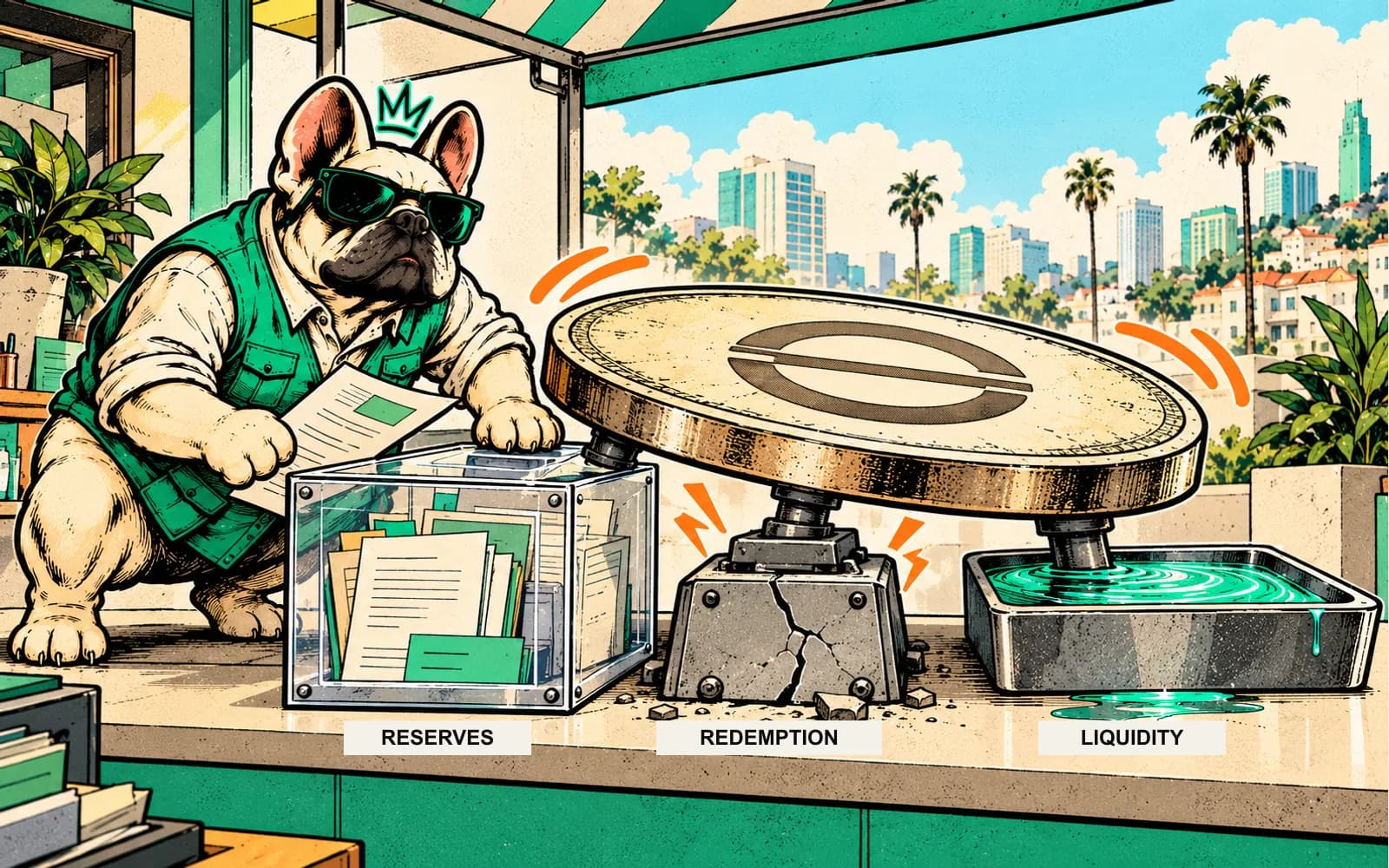
For a fiat-backed stablecoin, an issuer may create tokens when eligible customers supply funds and redeem tokens under stated conditions. If market participants can buy below the redemption value and redeem near the target, their trades can pull the market price back. That mechanism depends on reserves, banking access, issuer operations, eligibility, and market liquidity.
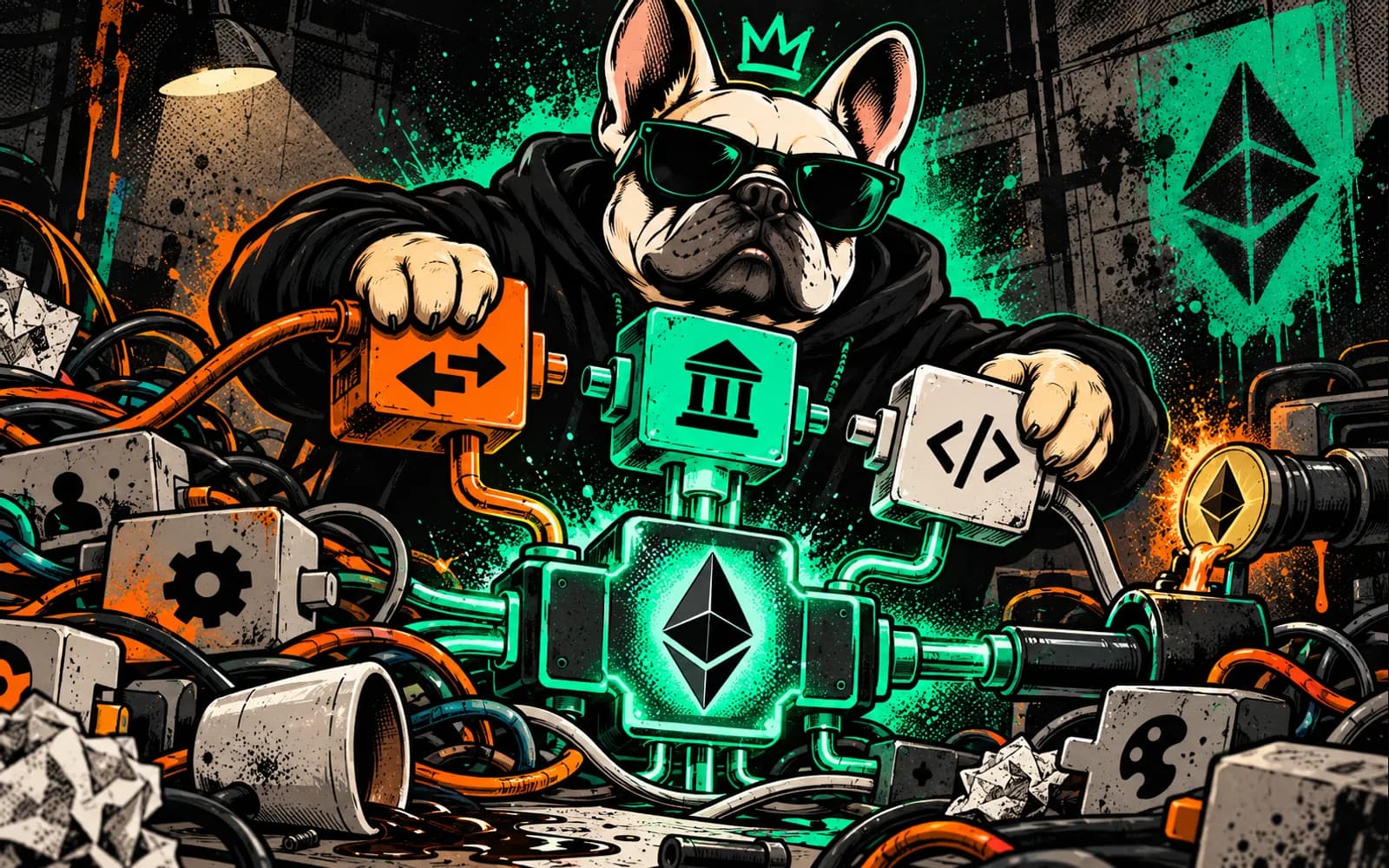
Crypto-collateralized systems use onchain collateral, debt positions, liquidation rules, and incentives. Other designs may depend heavily on algorithms or related tokens. The dependencies differ, so “stablecoin risk” is not one risk.
A simple deviation example
Suppose a token targets $1 and trades at $0.98 in one market. A qualified participant might buy 10,000 tokens for an illustrative $9,800 and redeem them for close to $10,000, before costs. That opportunity can increase demand. But it disappears if redemption is paused, the participant is ineligible, settlement is slow, or confidence in reserves drops.
The figures are examples, not a current quote or profit claim.
What to verify
- Who issues or governs the token?
- What backs it, and how is that backing reported?
- Who can redeem directly, in which jurisdictions, and at what cost?
- Which chain and contract represent the token you hold?
- How concentrated is liquidity across venues?
- Can contracts, administrators, custodians, or banks pause the mechanism?
These checks cover five different dependencies: the issuer or governance process, custody of backing assets, the quality and frequency of reserve reporting, the rules for direct redemption, and the onchain contract representing the token. A strong answer in one area does not remove the others. For example, a credible reserve report does not guarantee that every wallet holder can redeem directly or that a bridge-issued version is equivalent to the issuer’s native token.
“One dollar” in a wallet is not one bank dollar
A wallet’s $1 display may use the target value, a market feed, or cached data. It does not prove immediate redemption. During stress, different venues can show different prices and withdrawals can be limited.
Sources
- Circle: Transparency and stability — issuer information for USDC, accessed 13 September 2026.
- Ethereum.org: Stablecoins — overview, accessed 13 September 2026.
See something wrong? Brokzi logs material changes. Prepare a correction note.