

Crypto wallets explained: what they actually store
Follow the keys, records, and custody choices behind the thing we casually call a crypto wallet.
Find practical guides to wallet keys, recovery, signatures and spending permissions. Read the request's scope before connecting, signing or approving.
← All topics9 sourced articles, with the mechanisms and limits explained.
Follow the keys, records, and custody choices behind the thing we casually call a crypto wallet.
Understand why one recovery phrase can lead to many keys, and why neither secret belongs in a support chat.
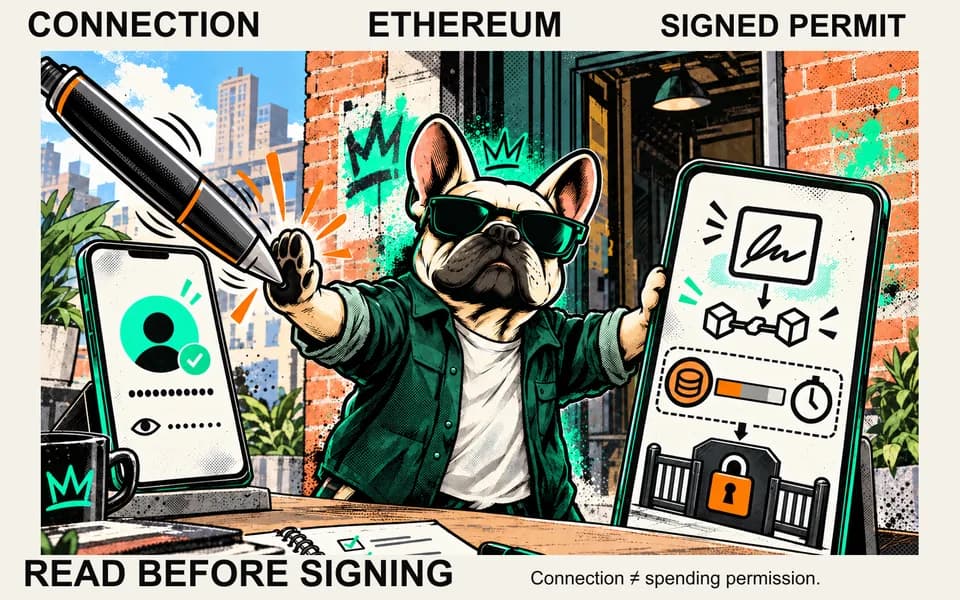
Read a MetaMask signature request by its permissions. Compare wallet connection, sign-in, token approvals, Permit2 and account delegation before signing.
Learn what an ERC-20 allowance permits, why unlimited approvals matter, and how to review access.
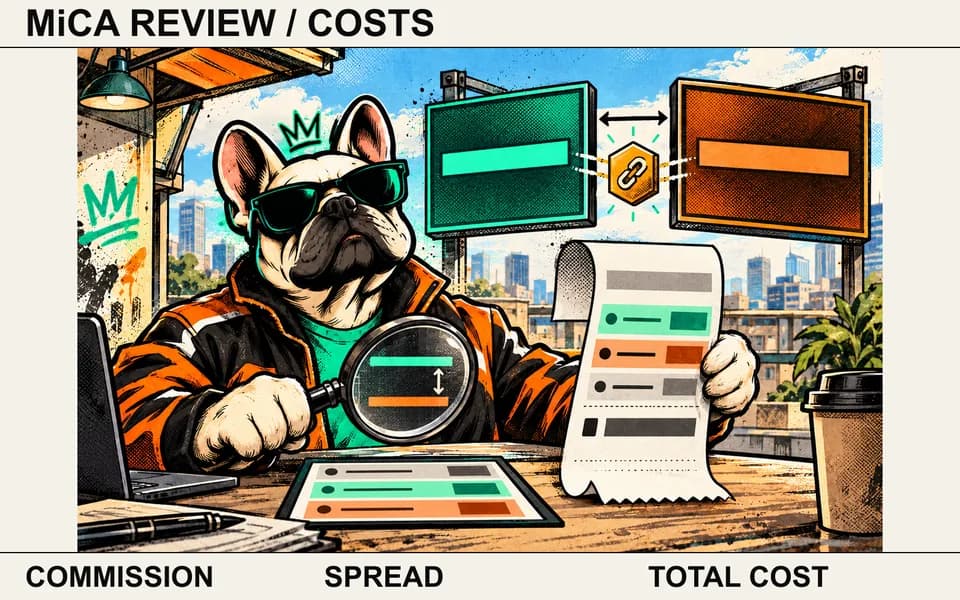
ESMA's 30 September proposals target crypto costs, staking disclosures and DeFi access. What EU users should know—and what is not new law.
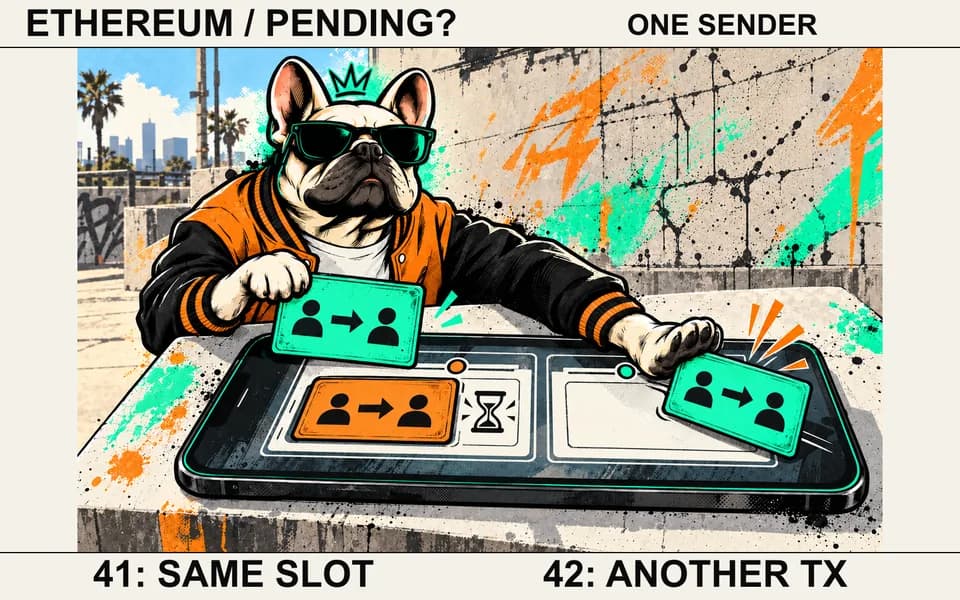
Check a pending Ethereum transaction by network, hash and nonce. Separate pending, dropped, replaced and failed before using a wallet's replacement controls.
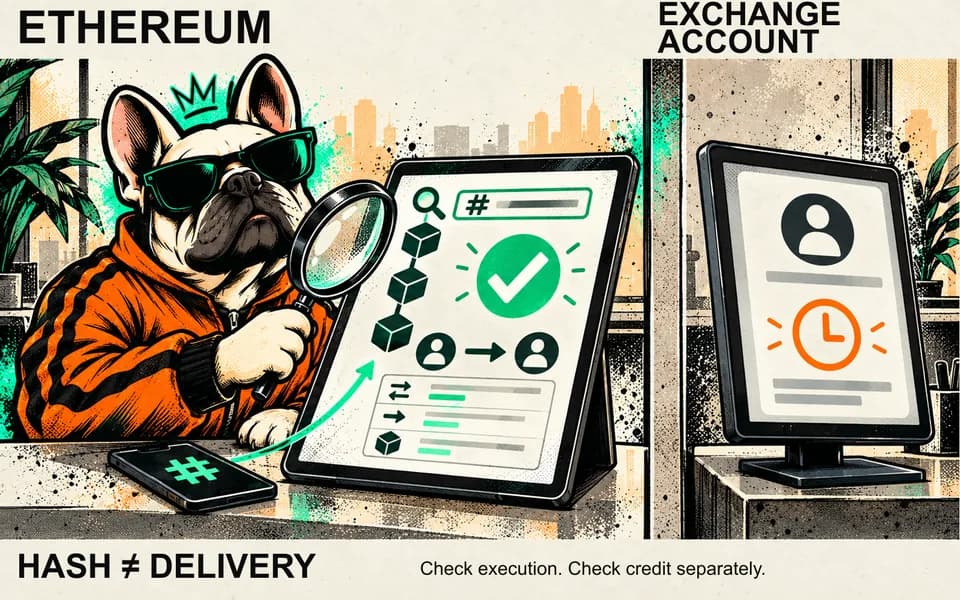
Read an Ethereum transaction hash, status, recipient, token transfers and fee. Learn what Success proves, and why it does not guarantee an exchange deposit.
See how limited block space, computation, urgency, and network design shape a transaction fee.
Look past the joke to examine supply, holders, liquidity, permissions, and the market structure around a meme coin.
A custody arrangement in which the user controls the keys or authorization needed to move assets.
An onchain permission allowing a specified spender to transfer up to an allowance of tokens.
A deception that tries to make someone reveal a secret or authorize an action they did not intend.
A system that communicates or represents assets and messages across otherwise separate networks.
A secret value used to create digital signatures that authorize actions for a blockchain account or output.
A network-specific identifier used as a destination or reference for blockchain activity.
A human-readable recovery representation commonly used to derive a wallet’s root secret and many keys.
This desk collects published explainers, not a list of approved wallets or a guarantee that a transaction is safe. Its introduction helps you choose the next useful question. Each linked article keeps its own sources and dates; this collection update does not claim a new independent review of every guide.
| Your question | Read next | What it helps separate |
|---|---|---|
| Where are my assets recorded? | Crypto wallets explained | Wallet interface, account records, keys and custody |
| What must stay secret? | Seed phrase vs private key | Recovery material versus an individual signing key |
| What does this wallet request permit? | Connection, signature and token approval | Account access, authentication, permits and delegation |
| Why can a contract still spend a token? | Token approvals explained | Standing allowance, spender and revocation |
For shorter definitions, use self-custody, token approval and phishing.
Ethereum.org explains the wallet/account distinction; Bitcoin.org covers backups, device security and keeping wallet software current. Recovery procedures differ by wallet. Keep secrets out of support chats, unsolicited forms and permission-checking sites. A recovery phrase is not something a legitimate sign-in needs.
In the conventional ERC-20 allowance model, setting a spender's limit and using it are separate operations. A signed ERC-2612 permit can create an allowance when submitted later; a deadline for submitting it is not automatically an expiry for the allowance.
MetaMask's advanced permissions are a different, supported-app smart-account flow. Do not assume every wallet offers those limits or every permission appears after connection. The guide above compares the mechanisms rather than treating every Sign button as a login.
This routine cannot eliminate protocol, device, custody or market risk. A token-approval list is not a complete account-security audit, and changing a permission cannot undo an already completed transfer.
Collection introduction researched 5 October 2026; individual linked guides retain their own research histories.