

What does a crypto wallet actually store?
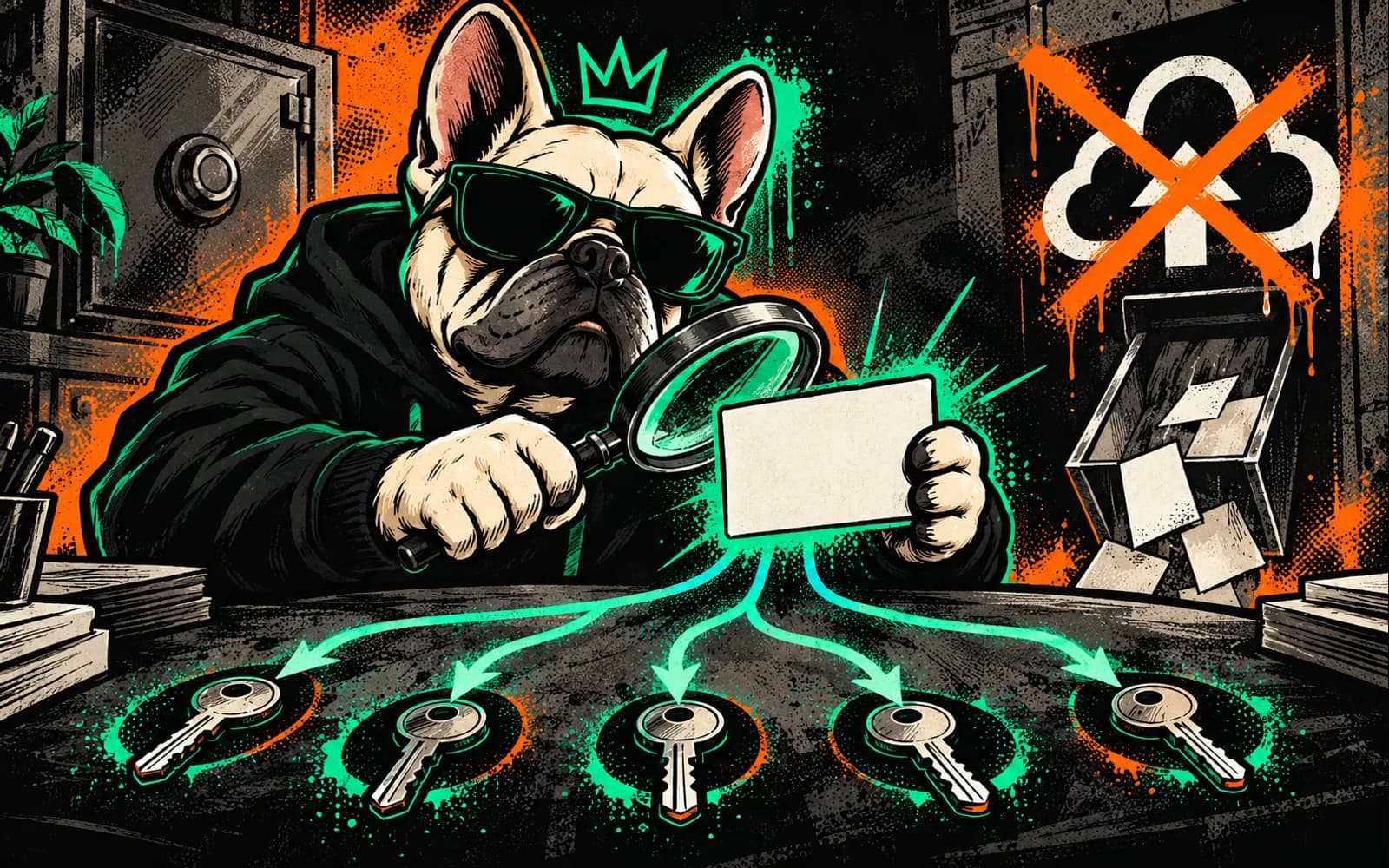
A blockchain keeps a shared record of which addresses can control which assets. A wallet helps you prove that you are allowed to request a change to that record. This is why deleting a wallet app does not automatically delete the assets: the network’s record still exists.
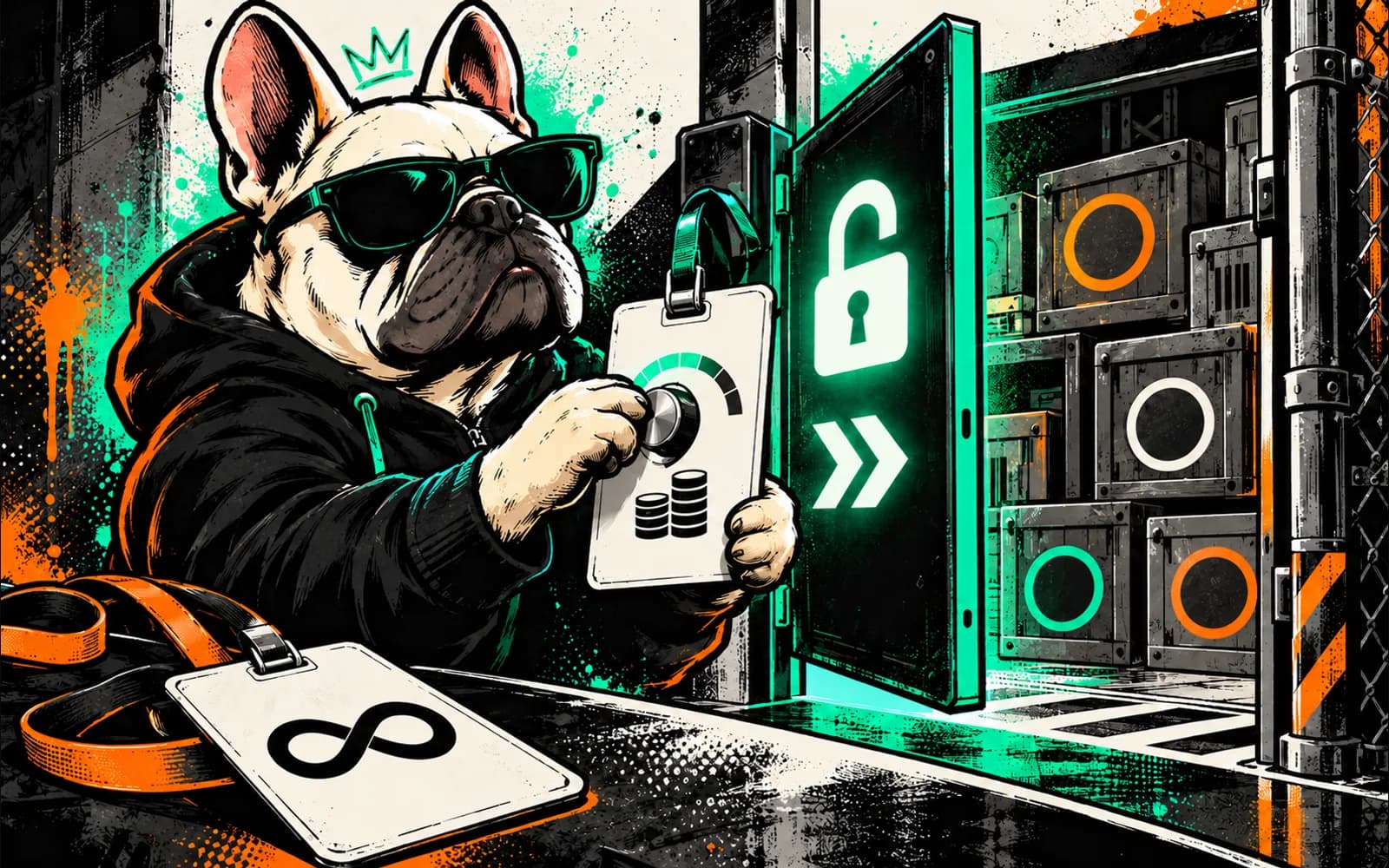
The useful mental model is keyring, not purse. Like every analogy, it has limits. A blockchain key does not open a physical container, and different systems can represent ownership in different ways. But it fixes the most common misconception: the app is not a little vault full of coin files.
What a wallet manages
Most wallets coordinate four things:
- Addresses. Public identifiers that other people or applications can use as a destination.
- Private keys. Secret values used to produce valid digital signatures.
- Transactions. Instructions that the wallet prepares for a network.
- Network access. A connection to nodes or service providers that read and relay blockchain data.
The wallet may also show balances, token metadata, transaction history, and application permissions. Those are useful views of the network state; they are not the underlying assets.
A worked example
Imagine Ada controls an address on Ethereum. Her wallet shows 50 units of an illustrative token. When she sends 5 units to Ben, the wallet prepares a transaction, shows the network and estimated fee, and asks for approval. The private key signs the transaction locally. The signed request is broadcast. Validators process it, and the shared state changes so Ada’s address controls 45 units and Ben’s controls 5.
The example numbers are illustrative. The important path is:
intent → transaction details → signature → network processing → updated record
At no point did five tiny files travel out of Ada’s phone.
Custodial and self-custody wallets
With self-custody, you control the keys or the recovery method that derives them. This gives you direct control, but it also makes backup, device security, and transaction checking your responsibility.
With a custodial service, the provider controls the keys and gives you an account interface. Recovery may be familiar, but access depends on the provider, its rules, its security, and availability in your region.
| Question | Self-custody | Custodial service |
|---|---|---|
| Who normally authorizes with the blockchain key? | You or your device | The provider |
| Account recovery | Recovery material or wallet-specific recovery | Provider account process |
| Main failure mode to plan for | Lost or exposed access | Provider, account, or policy failure |
| Regional availability | Wallet-dependent | Often restricted by jurisdiction |
Neither column is automatically “safe.” They move responsibility to different places.
What to check before approving anything
- Confirm the network, not only the token name.
- Read the destination address using more than the first and last character.
- Treat a seed phrase as a master recovery secret. Never type it into a site reached through a message or advert.
- For smart-contract activity, inspect the action and any token approval separately.
- Test unfamiliar routes with an amount you can afford to lose, while remembering that a successful small test does not prove the next destination is safe.
Limits of the keyring analogy
Some wallets use smart accounts, multiple signers, hardware devices, passkeys, social recovery, or provider-assisted recovery. The exact authorization mechanism can be more complex than “one key.” Always use the documentation for the wallet and network you actually use.
Sources
- Ethereum.org: Ethereum wallets — accessed 12 September 2026.
- Bitcoin Developer Guide: Wallets — accessed 12 September 2026.
See something wrong? Brokzi logs material changes. Prepare a correction note.