
What happened
ESMA, the European Securities and Markets Authority, set out proposals on 30 September 2026 for clearer crypto costs and safeguards around staking, lending and access to decentralised finance. Its MiCA review announcement concerns the European Union, not every European country or every crypto user worldwide.
This is ESMA's response to the European Commission's consultation. It does not change your account's fees or set a new effective date on its own.
What is confirmed
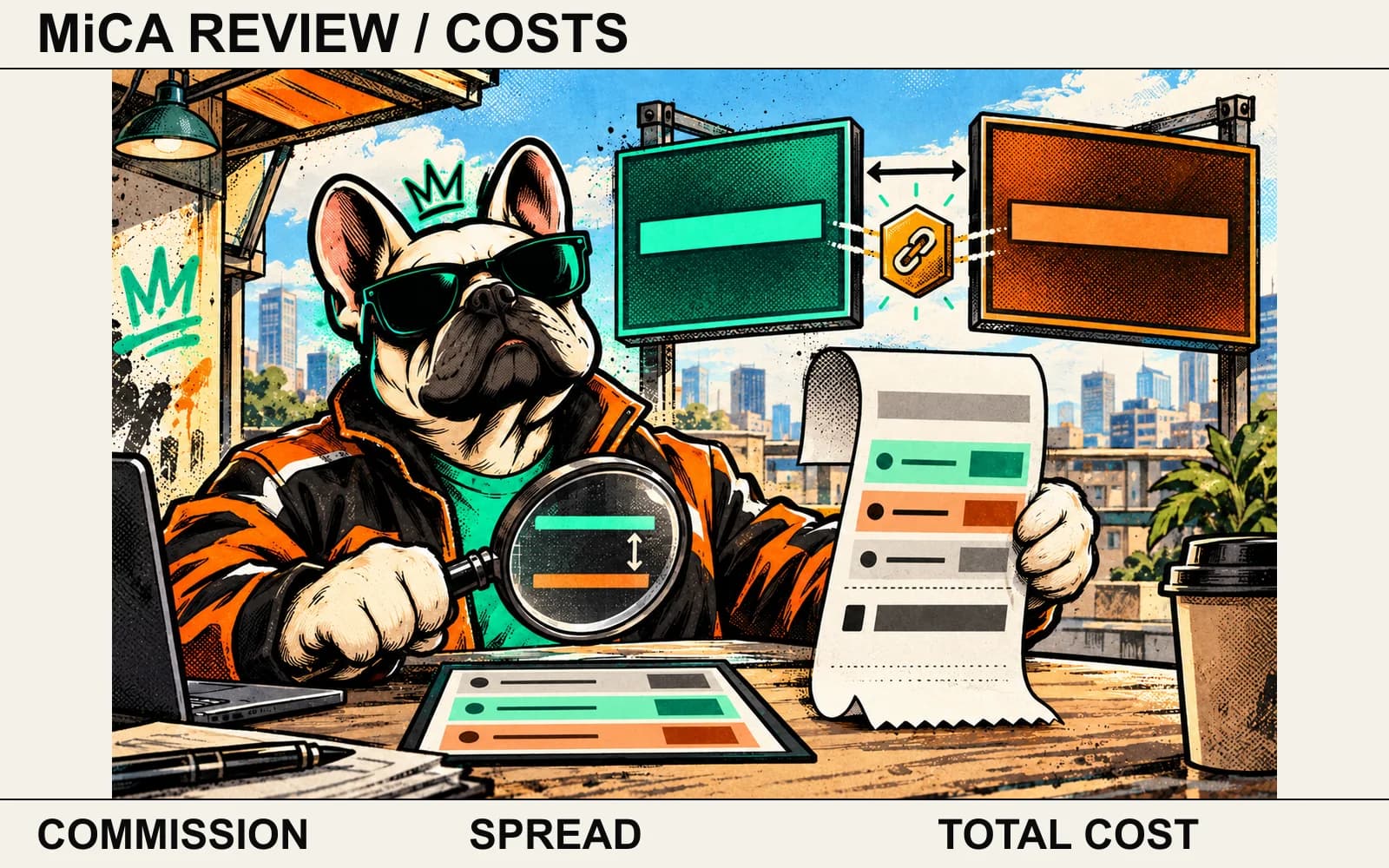
In its 16-page response, ESMA says a zero-commission claim can conceal costs in a wide spread. It wants providers offering execution, order transmission and exchange services to explain the transaction's cost components. A spread is the gap between buying and selling prices; zero commission is not the same as zero total cost.
For provider-arranged staking, ESMA proposes clearer disclosures about rewards, fees, withdrawal waits, slashing and insolvency treatment. Slashing means staked assets can be lost for validator faults or rule breaches. The response distinguishes self-directed staking, technical services, pooled or custodial arrangements and separate liquid products. It does not automatically classify staking as lending.
For DeFi, ESMA proposes a regulated service category for crypto-asset service providers that give clients access to protocols. Risk disclosure, routing transparency and conflicts would be part of that gateway's obligations. Open-source development or self-custody would not automatically become regulated intermediation. This is not a blanket DeFi ban or a promise that a provider's interface makes a protocol safe.
The announcement also calls for tighter treatment of influencer and third-party promotions. ESMA presents these changes as ways to improve information and supervision; improved protection is their intended outcome, not a verified result.
Existing rules are not a blank page
MiCA already requires crypto-asset service providers to publish pricing, cost and fee policies prominently on their websites. Article 66 also requires fair, clear, non-misleading client information and risk warnings. ESMA is proposing changes to that framework, not announcing the first obligation to disclose any fee.
Why it matters
A network fee is a separate mechanism from a provider's commission or spread. For a particular service, identify who charges what and which quote the cost applies to. This report has not compared real platform charges or assessed any firm's compliance.
What remains unknown
The Commission's targeted consultation page, checked 5 October 2026, marks that consultation closed after its extended 30 September deadline. It says responses will inform a review report, which may be accompanied by a legislative proposal if warranted.
ESMA's submission is one contribution, not the Commission's final decision. The eventual wording, adoption and application date of these suggested changes remain unconfirmed in this report. No new deadline for retail users follows from the announcement.
Brokzi’s Take — read the quote, not only the fee
When comparing a service, a low advertised fee answers only one question. Look for the actual quote and terms, who controls the assets, and what limits withdrawal. A wallet's custody model and a product's legal terms still matter. This is explanatory reporting, not a recommendation to trade, stake or lend, or personal legal advice.
Sources
Primary sources read 5 October 2026. Event date is 30 September, separate from this article's publication date. The full response supplies the proposal detail; EUR-Lex supplies the existing Article 66 context. No platform test, legal compliance assessment or protection guarantee.
See something wrong? Brokzi logs material changes. Prepare a correction note.