
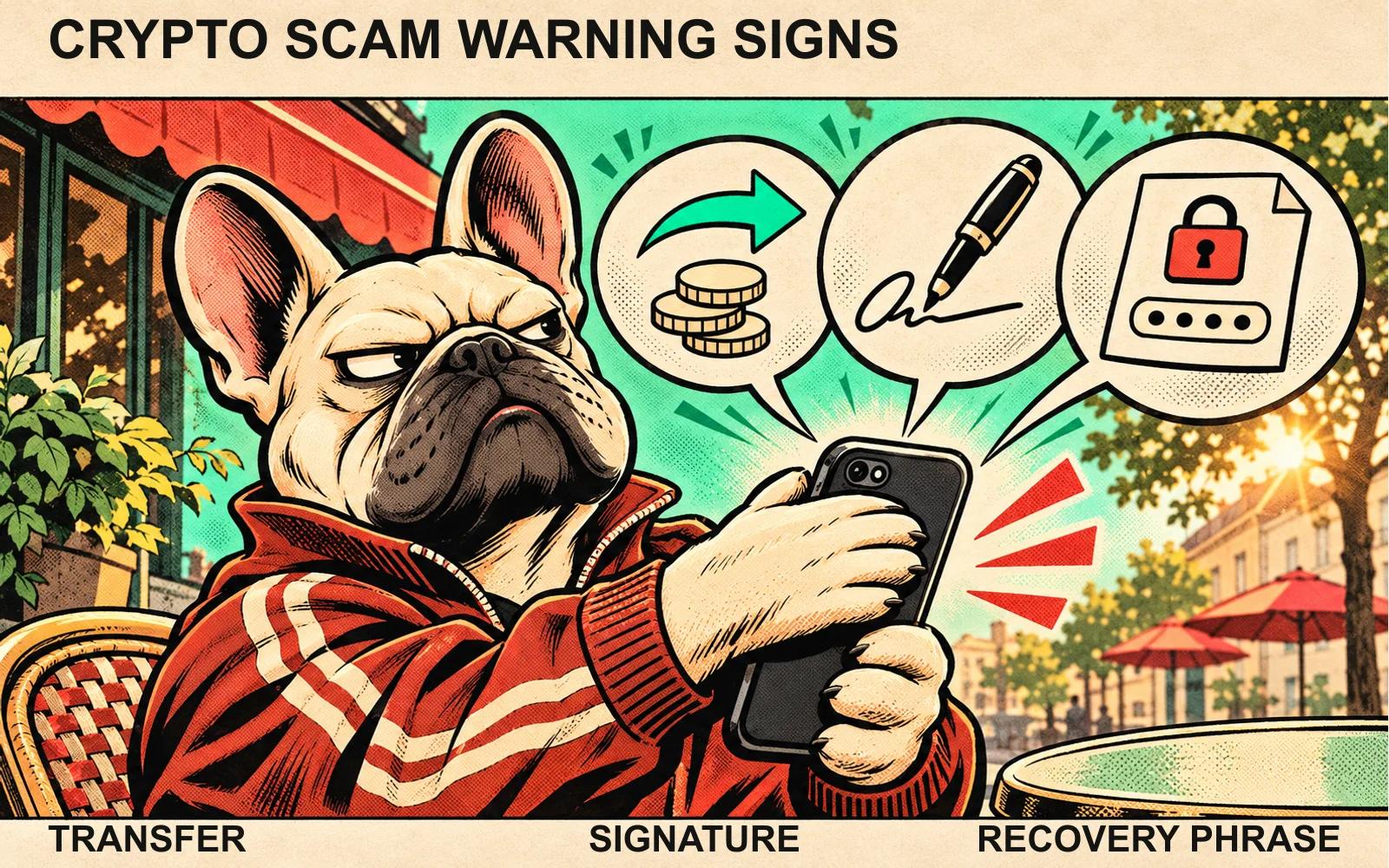
A message says your wallet is at risk and you have five minutes to act. Before you worry about who sent it, look at the action it asks you to take. A payment, a wallet signature and a recovery phrase each expose something different.
The US Federal Trade Commission describes impersonators who pressure people into sending crypto. The UK Financial Conduct Authority flags unexpected contact, pressure to invest quickly and promises of unrealistic returns. A familiar logo or a polished site tells you little about who is behind the request.
What is the message asking you to do?
Each situation below is fictional. If a request is unexpected, close the message and open the service through an app, bookmark or contact method you already know.
| Request | What you could expose | What to do |
|---|---|---|
| Send crypto to a new destination | A transfer moves funds and is usually difficult to reverse. | Pause. Verify the recipient and network independently. |
| Sign a wallet prompt to unlock something | The signature may authorize an action or grant spending permission, depending on the request. | Reject an unexpected prompt. Check the request through the official app. |
| Give a support agent your recovery phrase | Someone with the phrase can usually restore the accounts derived from it and control their funds. | Keep it private. End the conversation and use the provider’s official support route. |
A signature prompt can have consequences even if it shows no immediate transfer. Our token approvals guide explains where to check whether a spending allowance exists. If someone gives you a destination that looks familiar, compare the entire address with a trusted record. Address poisoning shows why matching ends are insufficient. MetaMask’s wallet safety guidance explains why your recovery phrase must stay private.
What if you already acted?
Stop replying and keep the message, date, transaction ID and screenshots that contain no secrets. If you used an exchange or other provider to send money, contact it through its official support channel. Be wary of follow-up messages that offer to recover the money for a fee.
- United States. Report consumer fraud or suspicious cryptocurrency activity through the FTC’s ReportFraud portal. The FTC’s crypto scam guide lists other reporting routes for different circumstances.
- United Kingdom. Report a suspected crypto investment scam to the FCA. If you lost money, follow the FCA’s guidance to contact the relevant police reporting service as well. Its reporting page lists the routes for your location.
Sources
See something wrong? Brokzi logs material changes. Prepare a correction note.