
What happened
The Ethereum Foundation's Access Cluster published an October 5 research post on native transaction assertions: rules that would test a transaction's result, rather than relying on a valid signature alone.
Authorizing a request does not guarantee the outcome you wanted. It is research and protocol design, not an announcement that your wallet has gained a new safety switch.
What is confirmed
The current EIP-7906 specification is marked Draft and was created on February 21, 2025. The Foundation's new explanation is not the proposal's creation date.
| Document | Status checked October 6 | What it does not establish |
|---|---|---|
| Foundation research post | Published October 5, 2026 | A wallet feature rollout |
| EIP-7906 | Draft; proposes outcome assertions | Confirmed upgrade activation |
| EIP-8141 | Draft; defines frame transactions | Universal wallet support |
EIP-7906 depends on EIP-8141's frame transactions, which separate validation, gas-payment approval and execution into steps. These documents do not establish that assertions are active on Ethereum Mainnet.
How the proposed check works
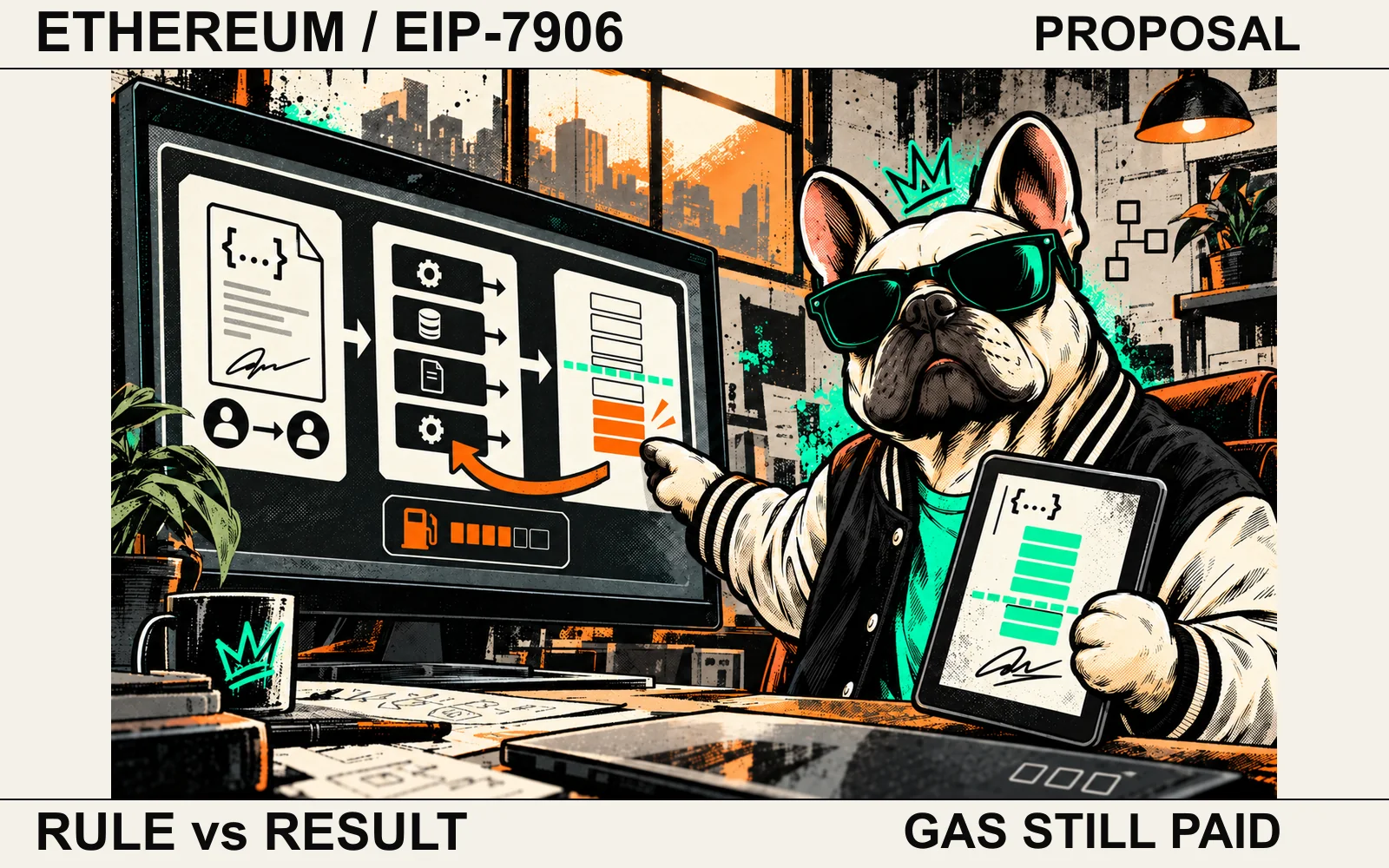
EIP-7906 adds a read-only POST_TX step after the execution body. It would inspect net changes to balances and storage, deployed contracts and emitted events. Multiple writes to one storage slot collapse into its starting and final values; this is not a replay of every intermediate write.
An assertion could reject an output below a chosen minimum or an unexpected permission change. The threshold needs a trustworthy source independent of the component building the transaction. A compromised site can supply a permissive rule as easily as a bad request.
If the assertion fails, the execution body reverts. The transaction can still be included as a failure, and the payer pays for gas consumed. Earlier validation-prefix changes, including gas-payment approval and account deployment, are not undone. It would not be a free undo button for everything a transaction touched.
Why it matters
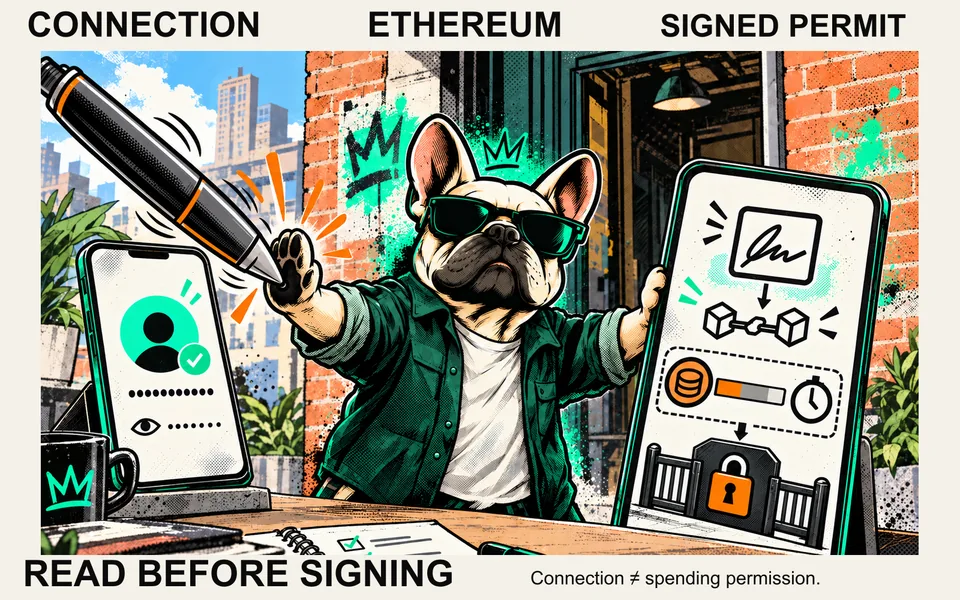
A readable signing screen explains a request; a simulation estimates effects against a particular state. Neither makes an outcome rule appear automatically. For today's permission scopes, use our connection, signature and approval guide.
EIP-7906 does not force every transaction to include an assertion. A wallet or protected protocol would need to require the specific correct check. A missing check, weak threshold or rule controlled by untrusted execution can leave the intended protection absent. Existing immutable contracts cannot simply acquire a new enforcement condition.
What remains unknown
We have not tested a wallet implementation or verified activation. There is no confirmed availability date here. The Foundation's discussion of possible solver safeguards is scoped to one transaction on one network, not an end-to-end guarantee for a cross-chain route.
An assertion would enforce its rule, not decide whether that rule matches your interests. It would not recover funds from earlier transfers or replace checking existing token permissions.
Brokzi's Take
The useful question is who chose the rule and whether it must actually run. A signature and a green interface badge cannot answer that on their own. Follow Wallet Security coverage for the distinction between current tools and proposed safeguards.
Sources
- Ethereum Foundation Access Cluster: transaction assertions, published October 5, 2026; checked October 6. Research announcement and design boundaries.
- EIP-7906: Transaction Assertions via State Diff Opcode, Draft, created February 21, 2025; checked October 6, 2026. Proposed post-execution semantics and security limitations.
- EIP-8141: Frame Transaction, Draft, created January 29, 2026; checked October 6. Frame-transaction dependency, not activation evidence.
See something wrong? Brokzi logs material changes. Prepare a correction note.