
One page says the Bitcoin dust limit is 546 sats. Another says 294. Your wallet still will not make the payment. Before blaming the missing satoshis, ask which output type and which rule each number describes.
For readers trying to understand a tiny onchain payment or a wallet's dust warning, this article separates three things: a node's relay policy, the economics of spending an output, and a service's own minimum. They are not interchangeable.
The examples use Bitcoin Core 31.1, listed on the project's download page when checked on 23 October 2026 in Asia/Tbilisi. These are version-scoped default-policy calculations, not a claim that every node or wallet uses those settings.
What Bitcoin dust means in node policy
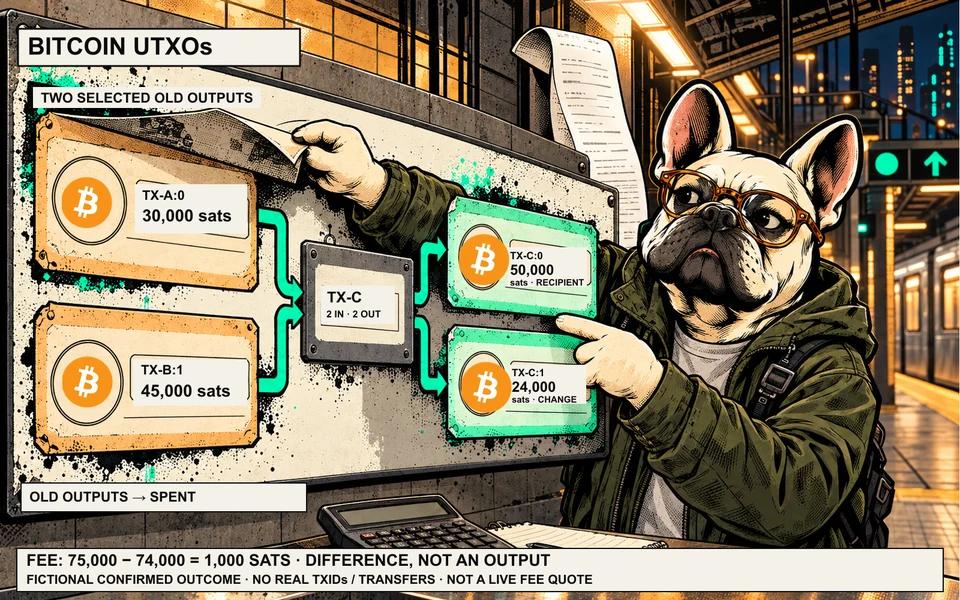
A Bitcoin balance can consist of several unspent transaction outputs, or UTXOs. Each has its own amount and spending conditions. Dust classification concerns an individual output, not the total number at the top of a wallet screen. The UTXO explainer follows how those records become inputs and new outputs.
Bitcoin Core's policy overview distinguishes local mempool rules from consensus. The mempool is a node's collection of unconfirmed transactions. Policy governs what it accepts there and relays; it is not applied to transactions inside blocks.
Consequently, a dust-policy rejection is not a consensus declaration that the amount cannot exist. Nor does another node accepting a transaction guarantee that it will spread or confirm. Other policy checks and valid spending conditions still apply.
Where 546, 294 and 330 sats come from
The 31.1 policy implementation calculates a threshold from the serialized output size plus an assumed future-input size. It applies the configured dust relay fee rate to that combined size. The default constant is 3,000 sat/kvB, equivalent to 3 sat/vB. Here, sat means satoshi, vB means virtual byte, and one kvB is 1,000 vB.
P2PKH is a legacy public-key-hash output; native P2WPKH is its SegWit counterpart; P2TR is a Taproot output. For these templates, the arithmetic is:
| Output type | Serialized output | Assumed spending input | Combined policy size | Default threshold |
|---|---|---|---|---|
| P2PKH | 34 bytes | 148 vB | 182 vB | 546 sats |
| Native P2WPKH | 31 bytes | 67 vB | 98 vB | 294 sats |
| P2TR | 43 bytes | 67 vB | 110 vB | 330 sats |
For example, 98 × 3,000 ÷ 1,000 = 294 sats. No fractional-satoshi rounding occurs in these three calculations. The version's fee-rate interface specifies rounding upward where a calculation would produce a fractional satoshi.
The Taproot row deliberately uses Core's policy assumption, not the size of its cheapest actual spend. The implementation retains the SegWit-style assumption for witness outputs rather than lowering the dust threshold to match Taproot's smaller minimum satisfaction. These policy sizes are not measurements of a complete signed transaction or personalised spending estimates.
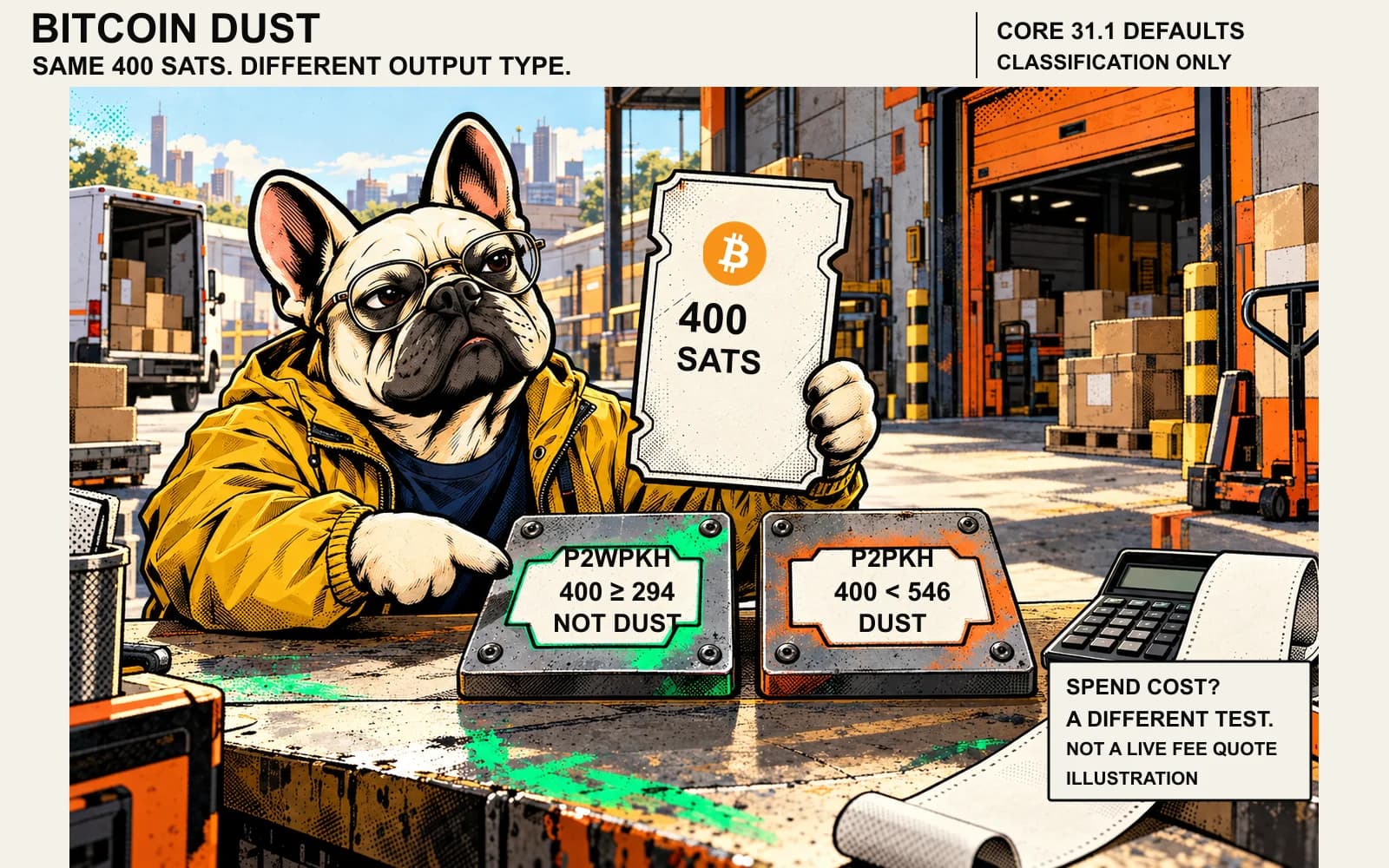
The comparison is strictly below the threshold. At these defaults, a 293-sat native P2WPKH output is dust; a 294-sat one is not. A hypothetical 400-sat output is dust as P2PKH but not as native P2WPKH or P2TR. Passing that classification alone does not establish acceptance, safety or confirmation.
A dust relay fee is not today's transaction fee
The name is easy to misread. dustRelayFee is the policy rate used to classify outputs. It is not a demand-based fee estimate, the fee your transaction pays, or a service's withdrawal charge.
The same policy header separately defines the default minimum transaction relay rate. Do not replace the dust constant with a live fee suggestion, or assume that paying a transaction 3 sat/vB makes any tiny output acceptable. The dust test looks at output amounts and templates; transaction admission has other rules.
An output can also be above its dust threshold yet expensive to spend. Consider a fictional 1,000-sat UTXO. Assume adding its input increases a proposed transaction's virtual size by exactly 68 vB. At an invented rate of 20 sat/vB, that added size corresponds to 68 × 20 = 1,360 sats of additional fee—more than the output contributes.
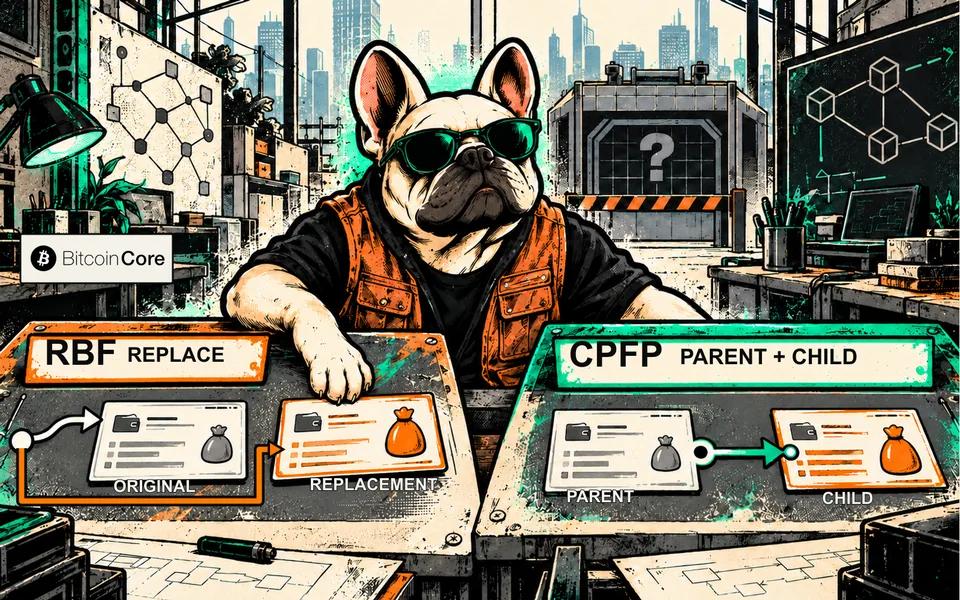
At a separate invented rate of 2 sat/vB, the same assumed size adds 136 sats instead. These are conditional arithmetic examples, not current rates, full transaction fees or a recommendation to consolidate. Actual size, signatures, other inputs and outputs matter. The RBF and CPFP article explains transaction-size and fee accounting separately.
The exception: ephemeral dust is not a tiny-payment loophole
It would be inaccurate to say this version rejects every transaction containing any dust output. Core 31.1 has a narrowly constrained mechanism called ephemeral dust.
The policy header and standardness checks permit at most one such dust output in a transaction. The ephemeral-policy implementation requires both its base fee and modified fee to be zero. When a child spends an output from an unconfirmed parent with dust, the child must also spend that parent's dust output under these checks.
This supports a dependent-transaction arrangement, subject to package and other admission rules. It is not blanket permission to send an arbitrary tiny standalone payment, a guarantee that a package relays, or an instruction to set your wallet's fee to zero. We have not constructed or broadcast such a package.
There is another distinction in GetDustThreshold: an output whose script is provably unspendable receives a zero threshold. That does not make its value recoverable. “Not dust” and “I can spend it” answer different questions.
A small wallet balance is not automatically lost
“Below this output-creation threshold,” “unprofitable at an assumed spending rate,” and “unspendable under its script” are different findings. A dust-policy label does not itself erase an existing UTXO. Whether a wallet can use it depends on control, spending conditions, transaction construction and the applicable node policy.
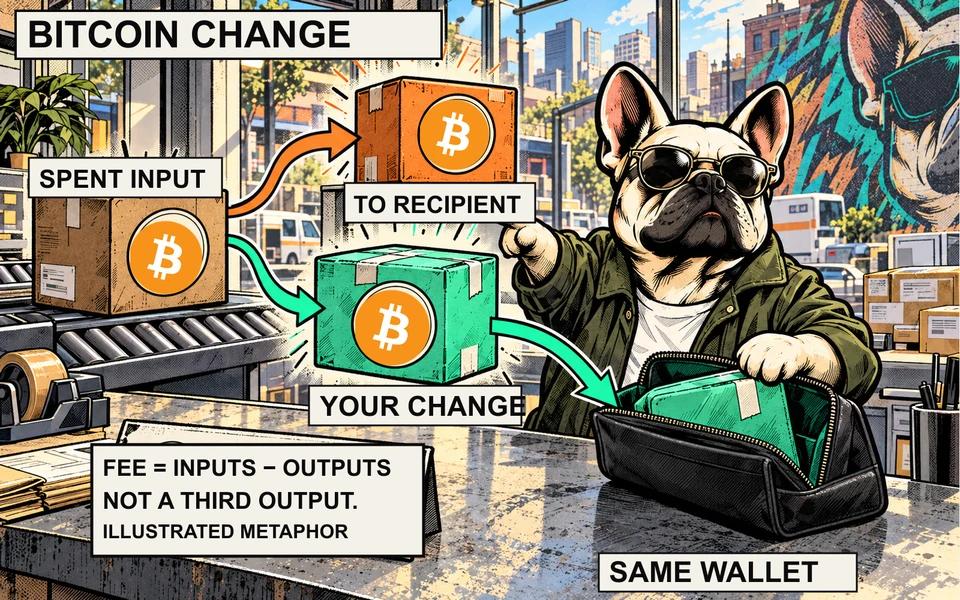
A new change output can face an output-size test too. A wallet may avoid creating a remainder it considers too small, but do not assume every app handles change identically. Inspect its proposed inputs, outputs and total fee rather than treating any missing remainder as a universal dust charge.
For an exchange or another custodial service, the displayed balance may be an internal account entry. Its deposit-credit or withdrawal minimum is a service rule, not a number established by this table. Likewise, block confirmations and exchange credit are separate events. This article does not establish any provider's current minimum.
Before interpreting a dust warning
Use these questions to identify the rule, without connecting a wallet or moving funds:
- Is the warning about a new output, an existing UTXO, or a custodial account balance?
- What is the actual output script type—not just the amount in sats?
- Which wallet or node version and dust-policy setting produced the warning?
- Are you comparing an output amount, a policy rate, a full transaction fee, or an extra input's spending cost?
- Is a service's deposit or withdrawal minimum the actual restriction?
Bitcoin dust makes more sense once the output, the policy and the spending cost stop sharing one label. Keep the script type and version beside any threshold you quote. A precise number without those qualifiers can still answer the wrong question.
Sources
Primary evidence checked 23 October 2026 (Asia/Tbilisi). Calculations are derived from the named source version or explicitly fictional assumptions. No Bitcoin node, wallet, live fee estimator, exchange minimum, signature, transaction or package was tested. This is technical education, not transaction or investment advice.
- Bitcoin Core download page: version 31.1 listed at the reporting check, not a claim about every installed node.
- 31.1 transaction relay policy overview: local mempool rules versus block consensus.
- 31.1 policy implementation: dust calculation, strict comparison, witness assumptions, unspendable-script treatment and standardness.
- 31.1 policy constants: default dust rate, separate minimum relay rate and maximum ephemeral-dust count.
- 31.1 fee-rate interface: rate units and upward rounding for fractional-satoshi fees.
- 31.1 ephemeral-dust checks: zero-fee requirement and the child's required dust spend.
See something wrong? Brokzi logs material changes. Prepare a correction note.