A DeFi app can display a precise price without offering a trade at that price. The number might come from an oracle report, while a swap quote depends on an actual route, trade size and available liquidity.
This explainer follows price-oracle inputs and their limits. Chainlink Data Feeds provide a documented example, not a recommendation or a claim that every oracle works the same way. For the contract basics, start with Ethereum explained.
What a DeFi price oracle supplies
An oracle brings information into a contract's execution environment. An ordinary Ethereum smart contract cannot simply browse an exchange website during execution to decide which price is true. Oracle systems supply data through an arrangement with its own sources, reporting process and trust assumptions.
An application can use that input when calculating collateral values or other protocol quantities. Its own code decides what to do with the report. Agreeing on an onchain record does not independently establish that the external information was correct.
The useful path to follow is: data source, oracle report, application checks, application action. Those stages can fail differently. A working website and a recently refreshed screen do not establish that every stage is healthy.
Read the report's identity, units and timestamp
For Chainlink's documented EVM interface, applications read a feed through its proxy using AggregatorV3Interface. The API reference distinguishes the feed's answer from its supporting metadata.
| Field or context | What it helps establish | What it does not prove |
|---|---|---|
| Network and feed address | Which deployment supplied the report | That the application actually uses this deployment |
| Feed description | What quantity or asset pair the feed describes | That every feed reports a market price |
answer and decimals() | The reported value and its numerical scale | A price available for your trade size |
updatedAt | When that round was updated | That the report is acceptable for every application |
| Application validation | Which inputs the app accepts or rejects | That every dependency is safe |
latestRoundData() returns the latest available round's answer and timestamps. The word latest does not mean that an update happened at the instant you opened the app. The interface also returns answeredInRound, which the current documentation marks deprecated; do not copy an old tutorial's freshness test without understanding the current feed.
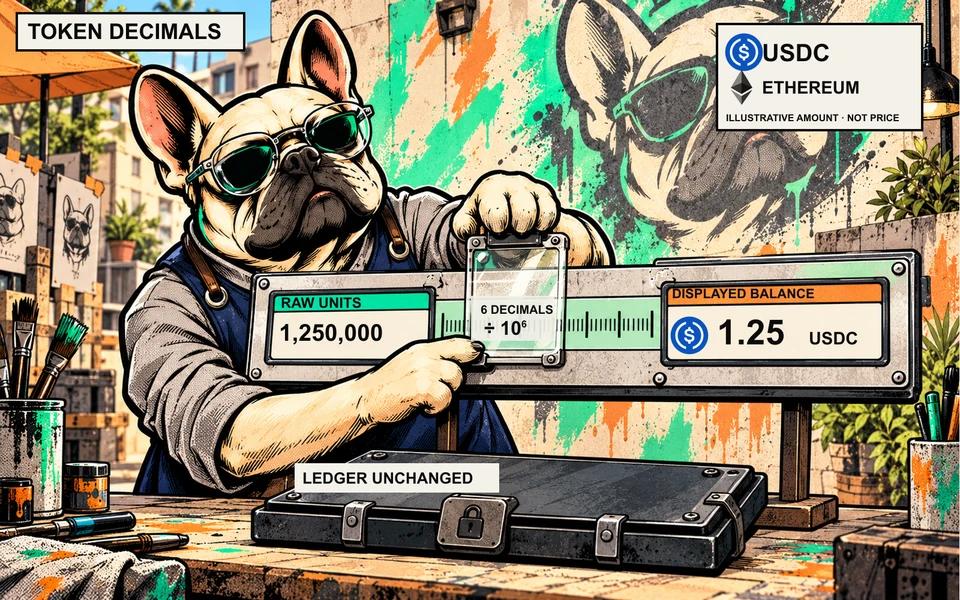
The feed's decimals are not automatically the same as a token contract's decimals. Both describe a scale, but they belong to different values. Our token-decimals explainer covers the token side. Copying a familiar display format can produce the wrong interpretation.
Why a feed does not update on every screen refresh
Chainlink's historical-data guide describes two triggers: a deviation threshold and a heartbeat threshold. A sufficient change in the monitored data can trigger an update; the heartbeat supplies an interval-based trigger when values stay within the deviation parameters.
These settings are feed-specific. They are not a single refresh rate for every asset, network or application. A heartbeat describes update behavior, not a guarantee that every report arrives on time. Chainlink's feed-selection guidance identifies congestion and network downtime as factors that can affect update frequency.
An app must therefore decide how to handle a report that is missing, delayed or unsuitable for its use. Refreshing the page does not create a new oracle round or repair that integration.
A six-minute-old report is a measurement, not a verdict
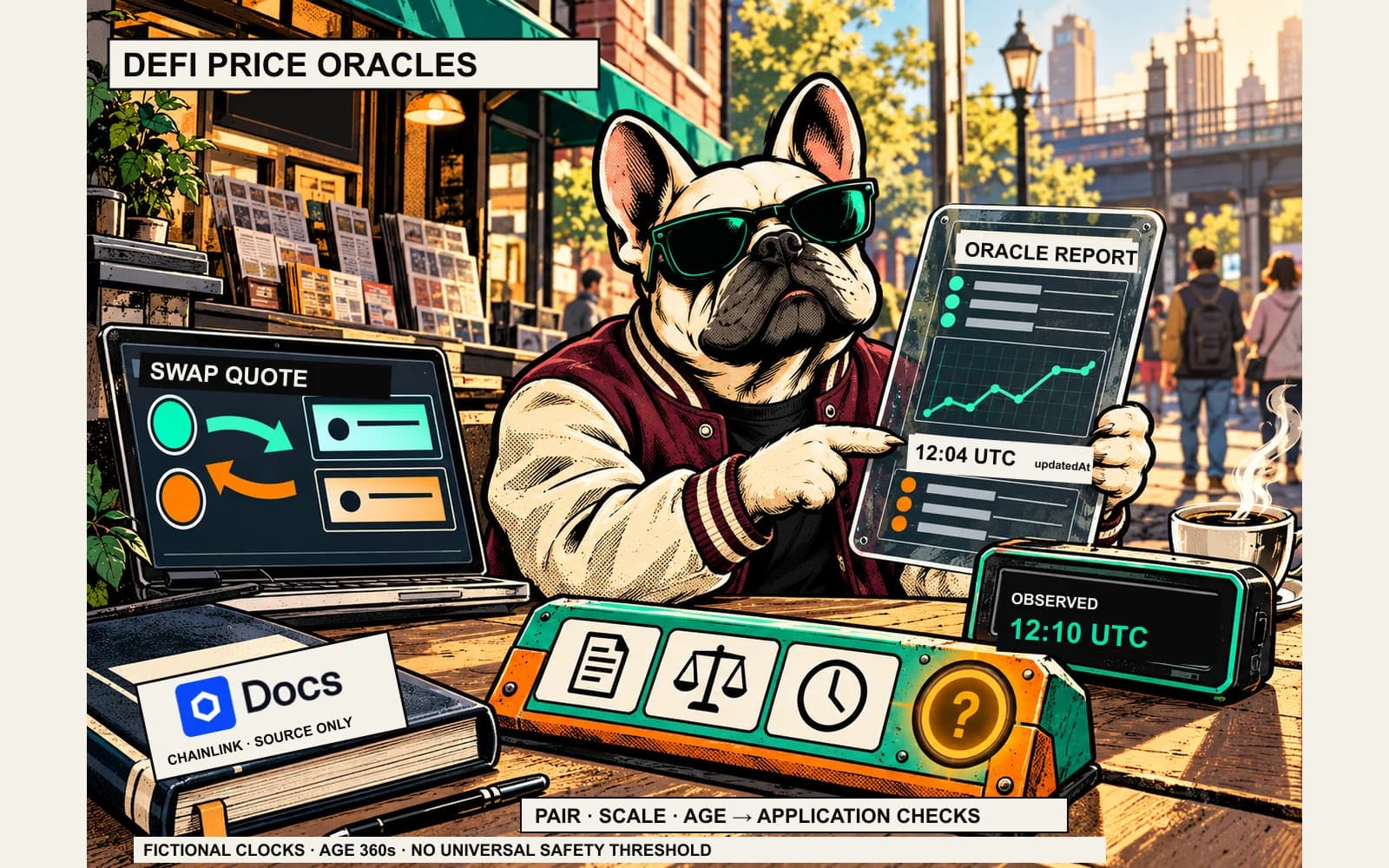
Consider a fictional observation made at 12:10 UTC, with the latest report's updatedAt corresponding to 12:04 UTC on the same day. The reported age is six minutes, or 360 seconds. This is timestamp arithmetic, not a live feed observation.
We have not specified the feed's update configuration, market conditions or the application's maximum acceptable age. The age alone therefore cannot tell us whether this report should be accepted. A six-minute report is not universally safe or universally stale.
A failed read, missing timestamp or unrecognized feed should remain an unresolved result in your notes. It is not evidence of a fresh price, and an interface should not quietly turn an unavailable result into a reassuring number. Chainlink's developer-responsibility guidance places data-quality checks, contingency logic and circuit breakers with the application developer.
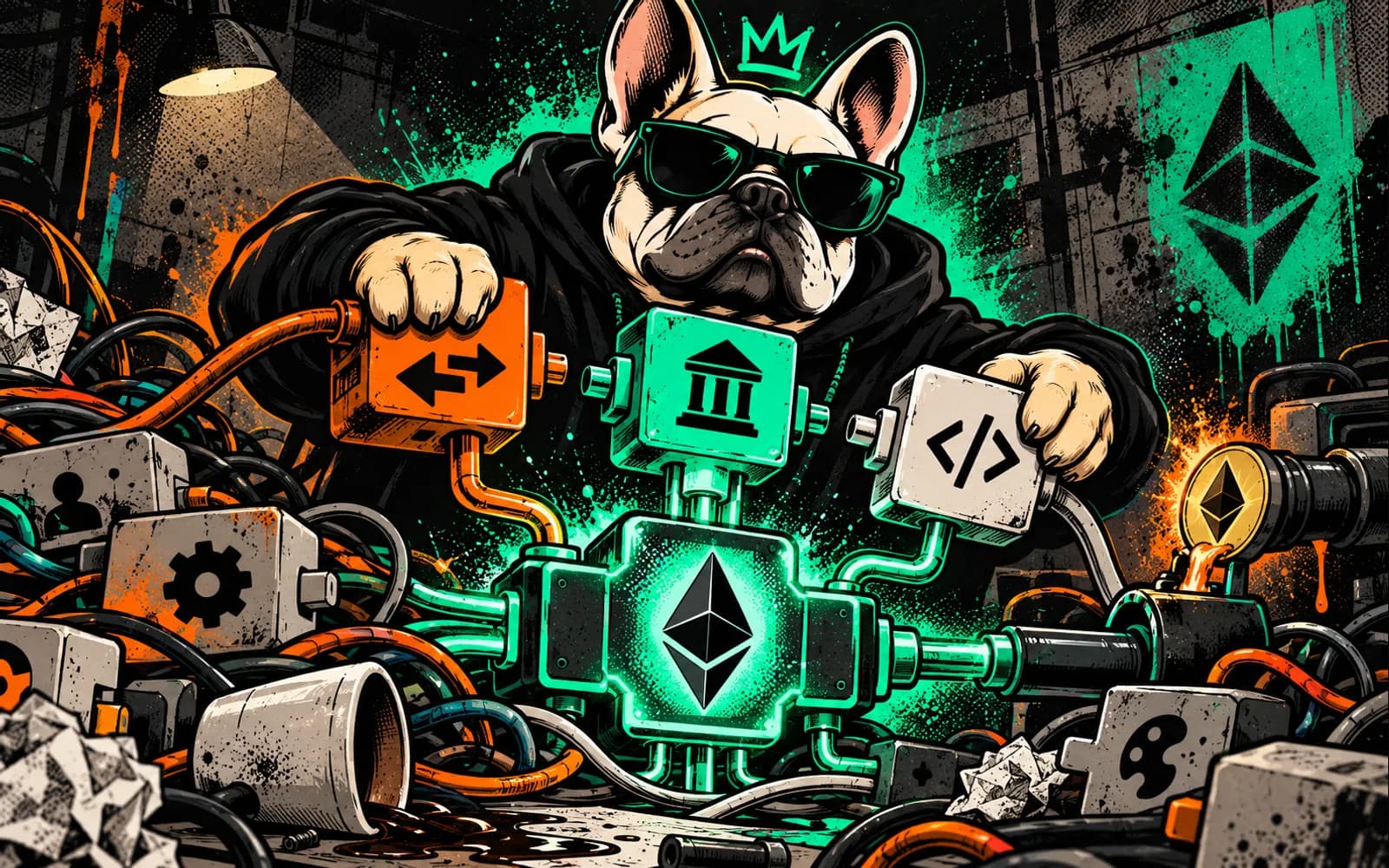
The cover uses this fictional clock comparison. Brokzi is checking the report before the app's validation step. He is not validating a real contract or declaring a feed unsafe because of a six-minute interval.
An oracle report is not an executable swap quote
Chainlink's selection guidance distinguishes market-price feeds from exchange-rate and other custom feeds. Some custom feeds obtain a protocol's internal conversion or redemption rate. That is a different quantity from a price available on a trading venue.
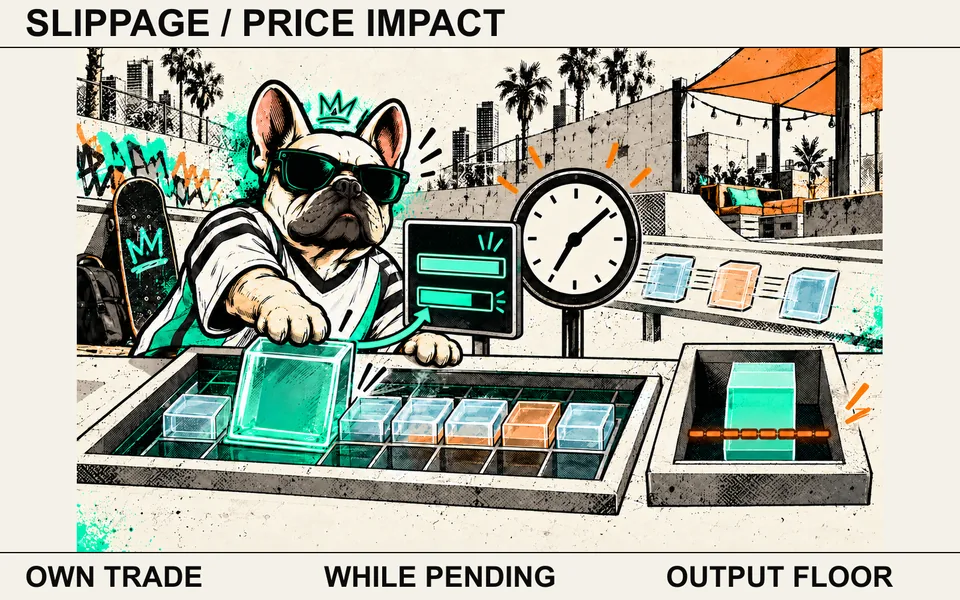
Even a market-price report does not specify how many tokens a particular pool will deliver for your order. A route quote also depends on execution conditions. Our slippage and price-impact comparison separates a spot reference, a full-size quote and the minimum output the transaction permits.
Before comparing two numbers, establish the same asset, pair, network, scale and observation time. Then establish whether each number describes a market observation, an internal conversion rate or a route-specific execution quote. A difference is a reason to investigate, not proof of an exploit or a trading opportunity.
On an L2, price freshness is only part of the check
A sequencer interruption can affect users' ability to transact on a rollup. Checking a price timestamp alone does not establish whether normal transaction access is available.
For supported networks, Chainlink documents a separate L2 Sequencer Uptime Feed. Its example checks sequencer status and waits through a configured grace period after recovery before proceeding to read price data. A sequencer-status report and a price report answer different questions.
That logic must be integrated by the application; a user opening the feed page does not activate it. The example's chosen delay is not a universally safe setting. The documentation also states that support is not expanding to additional networks, so do not assume an uptime feed exists for every L2.
A read-first oracle checklist
- Find the application's documented oracle dependency and actual network. Separate a provider's logo from evidence of the specific integration.
- Identify the feed address, quantity, source model and numerical scale. Do not assume a redemption-rate feed is a market-price feed.
- Record the latest available update time alongside your observation time. Check that the units and clock context match.
- Read how the application handles delayed, missing or out-of-range data. Look for documented pause, fallback and recovery behavior, including relevant L2 checks.
- Check whether a quoted security review covers that integration and configuration. A review of one contract version does not automatically cover later changes; see upgradeable contracts.
Reading public documentation and explorer records does not require your recovery phrase, a wallet connection or a signature. This checklist does not require running a trade or connecting to a purported "oracle repair" service.
Does a decentralized oracle remove price risk?
No. Decentralization can distribute parts of the reporting process, but the source model and application integration still matter. Chainlink's guidance distinguishes feeds with multiple sources from single-source designs and describes market-integrity and code risks. A familiar provider name alone does not establish a particular feed's suitability or an application's safety.
Can I sell at the oracle price?
An oracle report does not promise an available buyer, sufficient liquidity or an executable route at that value. Compare it with the actual quote and transaction bounds for the intended action. A displayed report and a trade quote describe different things, even when the two numbers happen to match.
Brokzi's take
DeFi price oracles make external information usable by contracts. To understand a number on an app, identify what the feed measures, when it updated and what the application checks before acting. Keep the trade quote separate. If the integration cannot be established, record the gap instead of treating the provider's name as the answer.
Sources
Primary documentation checked 19 October 2026 (UTC). This is educational coverage, not a new announcement, provider endorsement, live price measurement, investment recommendation or audit of a deployed application. No wallet was connected, no RPC price was presented as live, and no trade was executed.
- Ethereum.org: Oracles — external inputs, reporting arrangements and trust assumptions.
- Chainlink: Using Data Feeds on EVM chains — consuming reports through the documented interface.
- Chainlink: Data Feeds API reference — answer, scale, timestamps and deprecated fields.
- Chainlink: Getting historical data — heartbeat and deviation triggers, rounds and historical reports.
- Chainlink: Selecting quality data feeds — source models, feed types and integration risks.
- Chainlink: L2 Sequencer Uptime Feeds — status, recovery delay and supported-network scope.
- Chainlink: Developer responsibilities — application checks and contingency logic.
See something wrong? Brokzi logs material changes. Prepare a correction note.