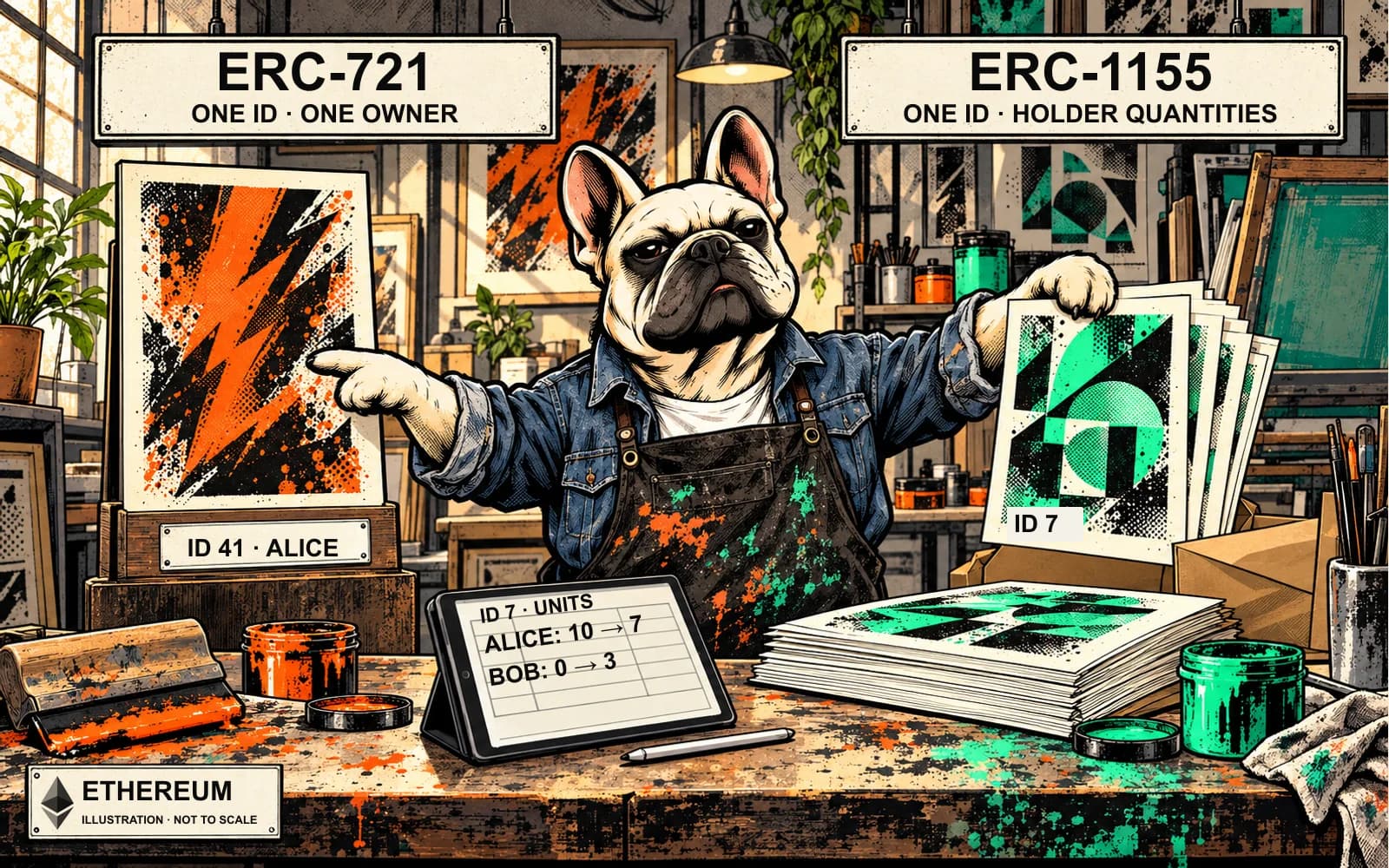
An NFT screen can show one picture and a quantity of 10. Another can show ten separate token IDs. Those records describe different things, even if the thumbnails look identical.
The useful difference in ERC-721 vs ERC-1155 is what the identifier points to: an individually owned token, or a token type whose quantities can sit at several addresses. This guide is for readers checking a collection or wallet entry, not choosing an investment or deploying a contract.
ERC-721 vs ERC-1155 at a glance
The ERC-721 specification defines individual-token ownership. ERC-1155 defines balances for token types within one contract. Read the function's arguments, not just its familiar name.
| Question | ERC-721 | ERC-1155 |
|---|---|---|
| What does an ID identify? | One distinct non-fungible token within that contract | A token type within that contract, potentially with multiple units |
| How do I ask who holds it? | ownerOf(id) returns its owner | balanceOf(address, id) returns that address's quantity |
What does balanceOf count? | An address's NFTs across that contract | An address's units of one specified ID |
| What moves in a standard transfer? | One identified token | A specified quantity of one ID, or quantities of several IDs in a batch |
| Is every ID a one-off? | Each valid ID identifies a distinct token | No; the implementation can support fungible or non-fungible types |
An address with an ERC-721 balance of 10 holds ten distinct IDs in that contract. It does not hold ten interchangeable units of one ID. With ERC-1155, a balance of 10 needs the ID beside it to say what is being counted.
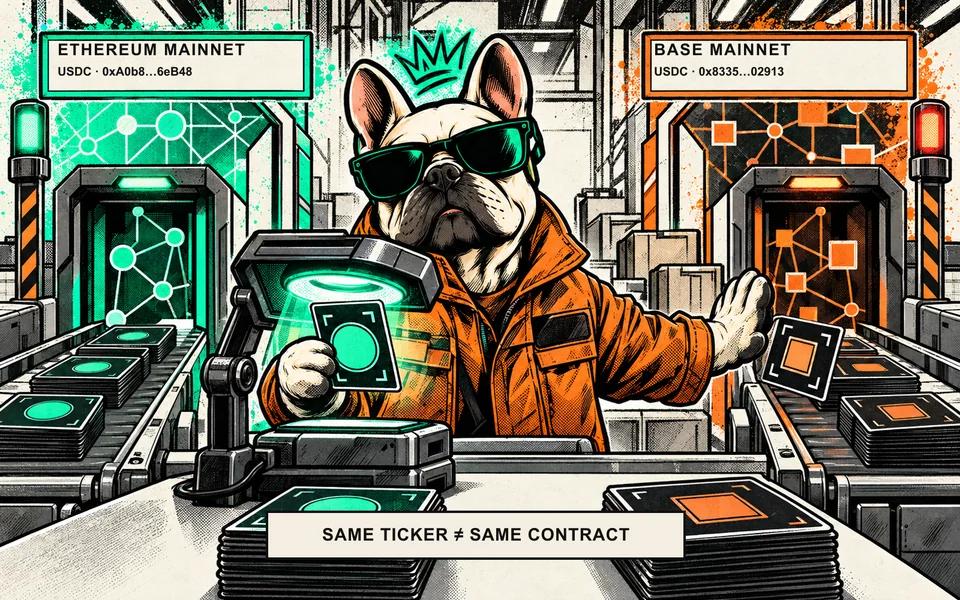
A token ID needs its contract and network
Token ID 41 is not a global serial number. A different contract can use 41 too. The same-looking contract address on another network also needs separate checking.
Keep this identification record together:
network + full token contract address + token ID
For ERC-1155, add the holder address and quantity when describing a holding. A name or picture cannot replace these fields. Our contract address and network explainer covers the first two checks; the token ID adds detail inside the contract.
ERC-721 IDs need not start at zero, run consecutively or indicate creation order. A larger number is not automatically a later mint, and a low number is not evidence of rarity. The specification explicitly tells callers not to assume an ID pattern.
One fictional collection, two different records
Suppose Alice holds ERC-721 IDs 41, 42 and 99 in a fictional contract. Her balanceOf(Alice) is 3 NFTs. If she transfers 42 to Bob, Alice's count becomes 2, Bob gains that individual token, and ownerOf(42) becomes Bob. The transfer does not divide 42 into smaller copies.
Now use a separate fictional ERC-1155 contract. Alice holds 10 units of ID 7, Bob holds 0, and the contract also has ID 8. Alice transfers 3 units of 7 to Bob:
- Alice's balance of
7: 10 − 3 = 7 units. - Bob's balance of
7: 0 + 3 = 3 units. - The combined quantity of
7remains 10 units, assuming these are the only holders and no mint or burn occurs. - ID
8is unchanged. Units of7do not become units of8.
Bob receives three units of the same ID, not three newly assigned ERC-721-style serial numbers. This example models the interfaces only. Alice, Bob, the contracts and quantities are invented; no transfer was performed.
ERC-1155 does not mean every item is fungible
Within the same contract, one ID can have many equivalent units while another represents a unique item. ERC-1155 does not impose one universal scheme for arranging those types.
Supply needs a separate question: how many units exist, and can more be minted? OpenZeppelin's ERC1155Supply extension adds per-ID supply tracking. Its documentation warns that a current supply of one does not guarantee that another unit of that ID can never be minted.
The base ERC-1155 interface does not require a totalSupply(id) function. ERC-721's totalSupply() belongs to its optional enumeration extension. A missing supply button is therefore not enough to identify a standard or prove a fixed edition size. Check the actual implementation and minting authority, not a label such as "1 of 1" in an image.
Batch transfers and approvals answer different questions
ERC-1155 includes safeBatchTransferFrom: one call can specify several IDs and their quantities from the same contract, between one sender and recipient. ERC-721's base interface has no equivalent standardized batch method. Applications can build other batching arrangements; neither standard supplies a universal gas-price comparison.
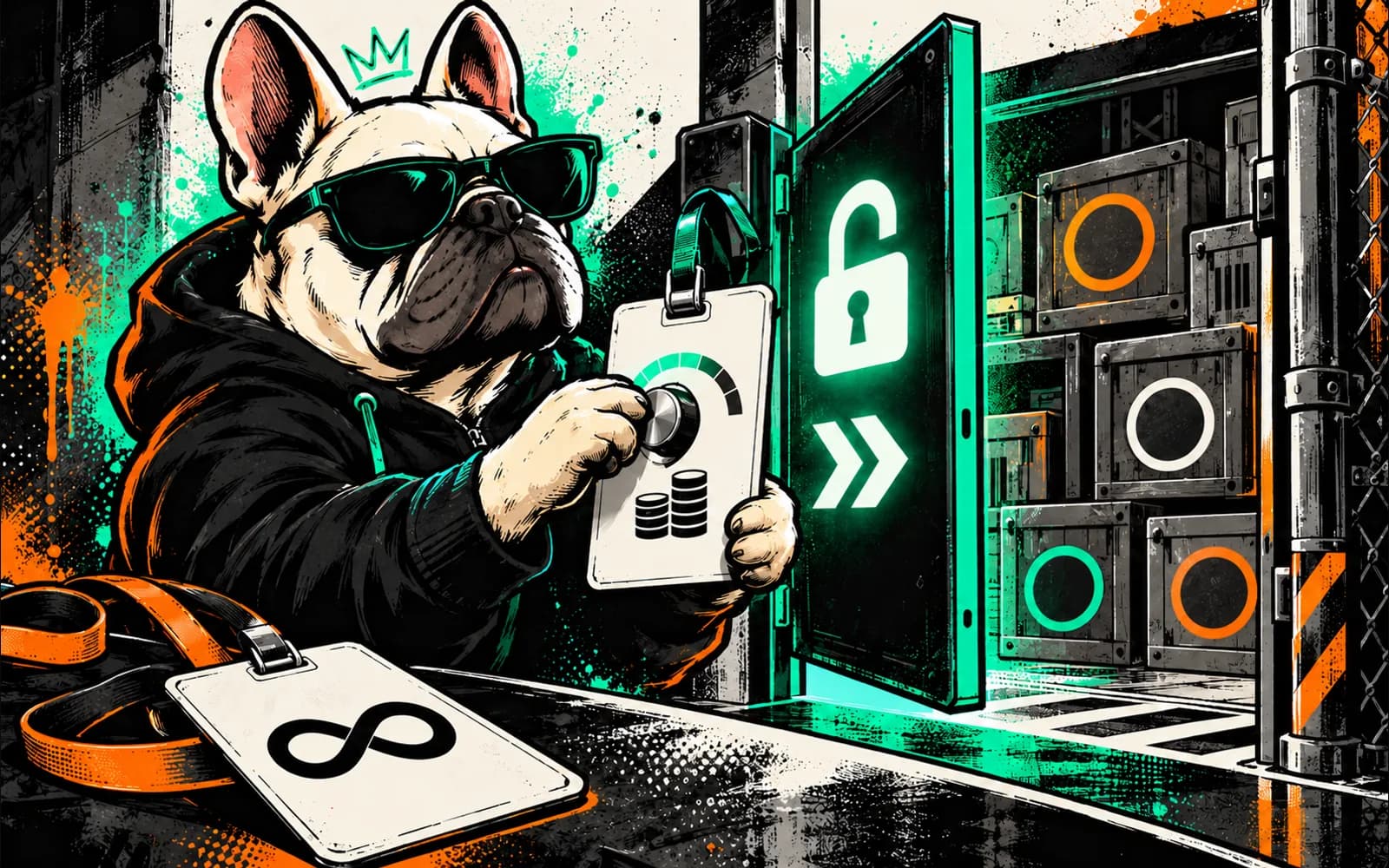
Permission is another field to read. ERC-721 supports approval for one token as well as operator approval. Standard ERC-1155 setApprovalForAll gives an operator authority over the holder's tokens in that contract, not just the ID currently pictured. Our token permissions guide explains why a connection and an approval are different; its ERC-20 allowance examples are not NFT quantity limits.
A "safe" transfer checks specified recipient-contract behavior. It does not certify a marketplace, guarantee a sale or prove the receiving app will display the item. For a smart contract wallet, receiving support depends on the actual account implementation.
Which NFT permission remains after a transfer?
ERC-721 clears the approved address for an individual NFT at the transfer stage. Operator approval is a separate record for an owner and operator within that contract. Base ERC-1155 uses account/operator approval; it has no ERC-721-style per-token approved address. Moving a token does not establish that every permission has been revoked.
Keep the network and full token contract fixed when comparing these records. The same function name on a different contract answers a different permission question.
| Record | Permission it describes | Important limit |
|---|---|---|
ERC-721 getApproved(tokenId) | One approved address for that valid NFT, or the zero address if none | Zero says nothing about the current owner's operator approvals. An invalid token ID makes this query fail. |
ERC-721 isApprovedForAll(owner, operator) | Whether this operator is authorized for this owner's NFTs in this contract | The owner is part of the question. It is not a token ID or a quantity allowance. |
ERC-1155 isApprovedForAll(account, operator) | Whether this operator is approved to manage that account's tokens in this contract | It is not limited to the displayed ID or quantity. Narrower permissions require a separate mechanism. |
These scopes come from the ERC-721 interface and approval/transfer clauses and ERC-1155's approval rules. A positive result describes permission, not a transfer already completed or a trustworthy operator.
A new owner means a different operator question
Return to fictional ERC-721 ID 42. Before its transfer, Alice owns it and getApproved(42) names Token Agent. Separately, Operator P is approved for Alice, and Operator Q is approved for Bob. These names are teaching labels, not real addresses. All records belong to the same fictional contract and network.
Assume a successful transfer to Bob, with no other approval changes or callback actions in this teaching example. The table distinguishes the required reset from the separate owner-scoped records:
| Record | Before transfer | At the transfer stage to Bob |
|---|---|---|
ownerOf(42) | Alice | Bob |
getApproved(42) | Token Agent | Zero address: this individual approval resets |
isApprovedForAll(Alice, P) | True | True under these assumptions; this grants no authority from Bob |
isApprovedForAll(Bob, P) | False | False under these assumptions; Alice's grant did not become Bob's |
isApprovedForAll(Bob, Q) | True | True under these assumptions; this is Bob's own operator grant |
Operator P's authorization from Alice does not become Bob's authorization because the token moved. Bob's existing operator relationship is a different record. The individual Token Agent approval is the record that ERC-721 explicitly requires to reset on transfer.
This is a comparison of declared permission contexts, not a claim that every contract necessarily preserves all operator flags through every transaction. Extensions and other operations need their own evidence. ERC-721 also allows extra conditions that can make a transfer fail; approval is not a guarantee of successful execution.
What the transfer event leaves open
ERC-721's Transfer event indicates that the individual approved address resets at that transfer. It does not indicate blanket operator revocation. Nor is that event a promise about the final approval state after every later operation in the transaction. A safe transfer can invoke a recipient-contract callback after the ownership change; later authorized actions need separate interpretation. An older event cannot replace the relevant current state.
For ERC-1155, Alice transferring some units of an ID to Bob changes their balances. It does not make Bob the one unique owner of that ID. The base standard defines account/operator approval and requires ApprovalForAll when that approval is enabled or disabled. It does not specify ERC-721's individual-token approval reset. A TransferSingle or TransferBatch event alone therefore cannot establish the current approval Boolean for either account. Its operator field identifies the transfer actor; an owner acting for themselves need not have approved themselves first.
Read each result with its actual owner or account and state context. A failed or undecodable result is unknown, not zero or false. None of this requires a wallet connection or a signature, and no such query or transfer was performed for this example. A temporary ERC-4907 user role is another record, separate from these base token permissions.
What ownership does not tell you
Ethereum.org's NFT overview distinguishes the token's ownership record from the work it represents and notes that creators can retain rights. Neither token interface, by itself, grants copyright or a commercial licence. Read the collection's actual terms for any claimed off-chain rights; this article does not assess a licence or jurisdiction.
A unique ID also does not mean the linked image is unique, permanent or valuable. Metadata can point elsewhere, and ERC-721 permits mutable metadata URIs. Two distinct IDs can display the same artwork. Conversely, several units of an ERC-1155 ID can intentionally share one edition image. The picture alone answers neither the ownership nor the supply question.
A read-first NFT checklist
Before interpreting a wallet card or collection listing:
- Establish the exact network, full contract address and token ID through independently checked project documentation.
- Identify whether the record is an individual owner or a holder's quantity of one ID.
- Separate the quantity you hold from the total supply, any minting cap and who can change issuance.
- Read the requested permission's actual scope. An operator approval is not a purchase receipt.
- Check metadata and any claimed rights separately from the token record.
You do not need to connect a wallet, sign a message or share recovery material to read these standards. For ERC-721 vs ERC-1155, start with the contract's ownership model and the ID's meaning. Then check quantity, supply and rights as separate facts rather than asking one thumbnail to explain them all.
Sources
Update — 20 November 2026: added the three permission scopes and the fictional transfer-state comparison. The original publication date, token-ID examples and illustrations are unchanged. Both complete official standards were checked for this addition: ERC-721 was created on 24 January 2018 and ERC-1155 on 17 June 2018; both are Final standards. This is not a new protocol release. The comparison covers their base interfaces, not a deployed collection, wallet or marketplace. No RPC/contract call, wallet connection, signature, approval or transfer was performed.
Primary documentation checked October 23, 2026. The standards describe interfaces, not the authenticity or safety of a live collection. No wallet connection, contract audit, mint, signature or transfer was performed. The worked example and illustration are fictional, and no investment, rarity or resale-value assessment is made.
- ERC-721: Non-Fungible Token Standard: token IDs, ownership, transfers, permissions and optional metadata/enumeration.
- ERC-1155: Multi Token Standard: per-ID balances, single/batch transfers, receiver rules and operator approval.
- OpenZeppelin Contracts 5.x: ERC1155: implementation and supply-extension boundaries, including future minting.
- Ethereum.org: Non-fungible tokens: token ownership, represented items and creators' retained rights.
See something wrong? Brokzi logs material changes. Prepare a correction note.