
An Ethereum transaction can be included at the chain tip while its block is still above the safe head. In one consistent Ethereum L1 view, latest selects the current head, safe selects the safe head, and finalized selects the finalized head. Before comparing heights, make sure the block at the receipt’s height still has the hash recorded in that receipt.
What the three block tags select
The Ethereum JSON-RPC reference lists the tags accepted by eth_getBlockByNumber. Each tag selects a block in the endpoint’s current view. The response includes the block number and hash. A tag gives you the position of a head on the chain. The receipt supplies the position and identity of the particular block you care about.
One transaction and three heights
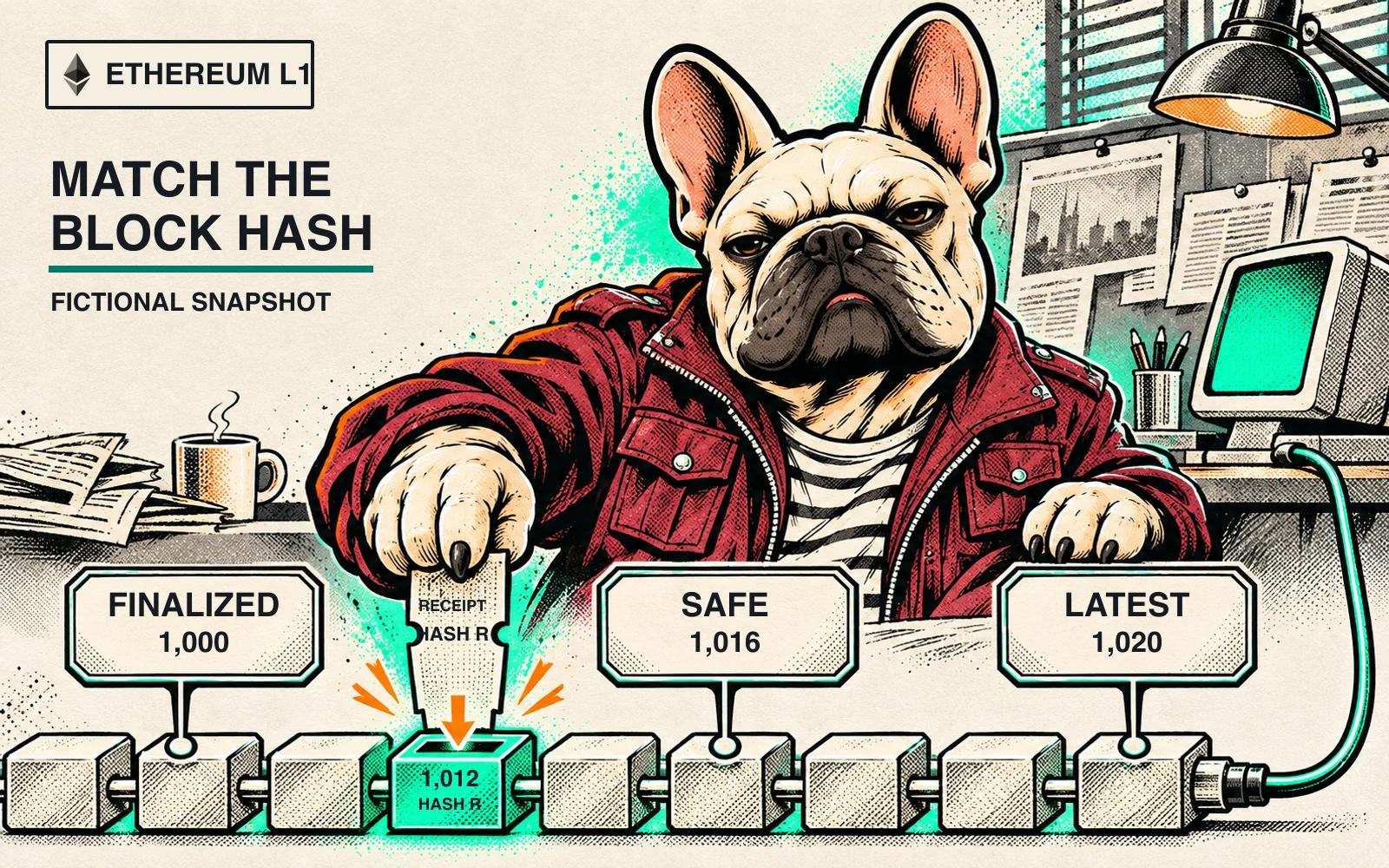
Imagine one Ethereum L1 endpoint reports the following in a consistent snapshot. The numbers are fictional and the letters stand in for full block hashes.
| Block tag | Height | Block hash | What the tag identifies in this snapshot |
|---|---|---|---|
latest | 1,020 | L | The endpoint’s current head. |
safe | 1,016 | S | The endpoint’s safe head. |
finalized | 1,000 | F | The endpoint’s finalized head. |
The transaction receipt puts the transaction in block 1,012, hash R. The same endpoint returns hash R for block 1,012 when queried by number. Under this consistent view, the containing block is on the chain and sits behind the safe head, but still ahead of the finalized head. It is covered by safe in that snapshot and has yet to be covered by finalized.
Why the block hash comes first
Height 1,012 identifies a position. Two competing blocks can occupy that position, so comparing heights alone can attach the status of one block to a receipt from another. If the numbered lookup returns a different hash or no block, the endpoint has not established that this receipt’s block is on its current chain. Treat the comparison as unresolved and refresh the receipt and head reads together. If the views keep changing, leave status unresolved.
Where the numbers come from matters. Requests made seconds apart can observe different heads, and separate endpoints can report different views while they sync. The three heights in the table are an illustration. They are neither a lead time for finality nor a promise that the tags always sit a fixed number of blocks apart.
Keep execution status separate
The receipt’s execution status answers whether the transaction succeeded or reverted. The containing block’s place relative to the heads answers how far the endpoint’s chain has advanced for that inclusion. A finalized block can contain a reverted transaction. Our transaction record guide explains how to read the receipt itself, and the Ethereum pending guide covers what a missing receipt can mean.
Sources
- Ethereum.org JSON-RPC API: block parameters, block lookups and transaction receipts — checked 16 November 2026.
See something wrong? Brokzi logs material changes. Prepare a correction note.