A governance page gives you a deadline number. Fine. But is it counting blocks, seconds, or something else?
A governance timepoint only makes sense with its clock. ERC-6372 proposes two functions: clock() reports the current timepoint, while CLOCK_MODE() describes how that clock works. A block-number reading is not a Unix timestamp, even when both arrive as integers.
First establish which clock the actual contract uses and whether the field you are reading belongs to that clock. Then interpret the number. Neither a large balance nor a familiar-looking deadline establishes voting eligibility.
Source status: the official ERC-6372 and ERC-5805 pages checked for this explainer are both in Review, rather than Final. This article explains their proposed interfaces and limits; it does not verify a particular DAO or governance deployment.
Two functions, two different answers
Think of clock() as the reading and CLOCK_MODE() as the unit label. Reading one without the other is how a perfectly ordinary number becomes a terrible countdown.
Under ERC-6372, clock() returns a uint48 timepoint and must be non-decreasing. That permits equal consecutive readings; it does not mean the value increases on every call or measures elapsed seconds.
CLOCK_MODE() returns a machine-readable string formatted like a URL query string:
| Descriptor | What it identifies | What you still need |
|---|---|---|
mode=blocknumber&from=default | A clock using the block number supplied by the NUMBER opcode | The actual chain and the meaning of the governance field |
mode=blocknumber&from=<CAIP-2-ID> | Another block-number source, identified by a CAIP-2 blockchain ID | The specified source and how the implementation uses it |
mode=timestamp | A timestamp-based clock | The implementation's timestamp definition and the field's rules |
ERC-6372 also allows other modes. For those, it says the descriptor should use a unique identifier for the encoded mode field. An unfamiliar descriptor needs documentation, not a guess that it means seconds.
The clock interface describes timekeeping. It does not, by itself, say which proposal is active, who can vote, or whether an operation can execute.
A 20-unit gap can mean two different things
Here is a deliberately fictional comparison. Neither row represents a live proposal, and the values are teaching numbers rather than real dates.
| Fictional system | Documented clock | Current reading | Documented endpoint | Numeric gap |
|---|---|---|---|---|
| A | Block-number clock | 1,200 | 1,220 | 20 block units |
| B | Timestamp clock explicitly using Unix seconds | 2,400 | 2,420 | 20 seconds |
The subtraction is the same: endpoint minus current reading equals 20. The unit changes the answer.
For A, that is not a promise that the endpoint is a fixed number of minutes away. A clock tied to blocks advances with its defined block source. Converting the gap using an assumed average block time produces an estimate, not a guaranteed wall-clock deadline.
For B, the documented unit is seconds. Even then, the gap alone does not settle the boundary rule: the actual governance implementation determines whether a particular action is allowed at, before or after that endpoint. These examples do not establish a real voting window.
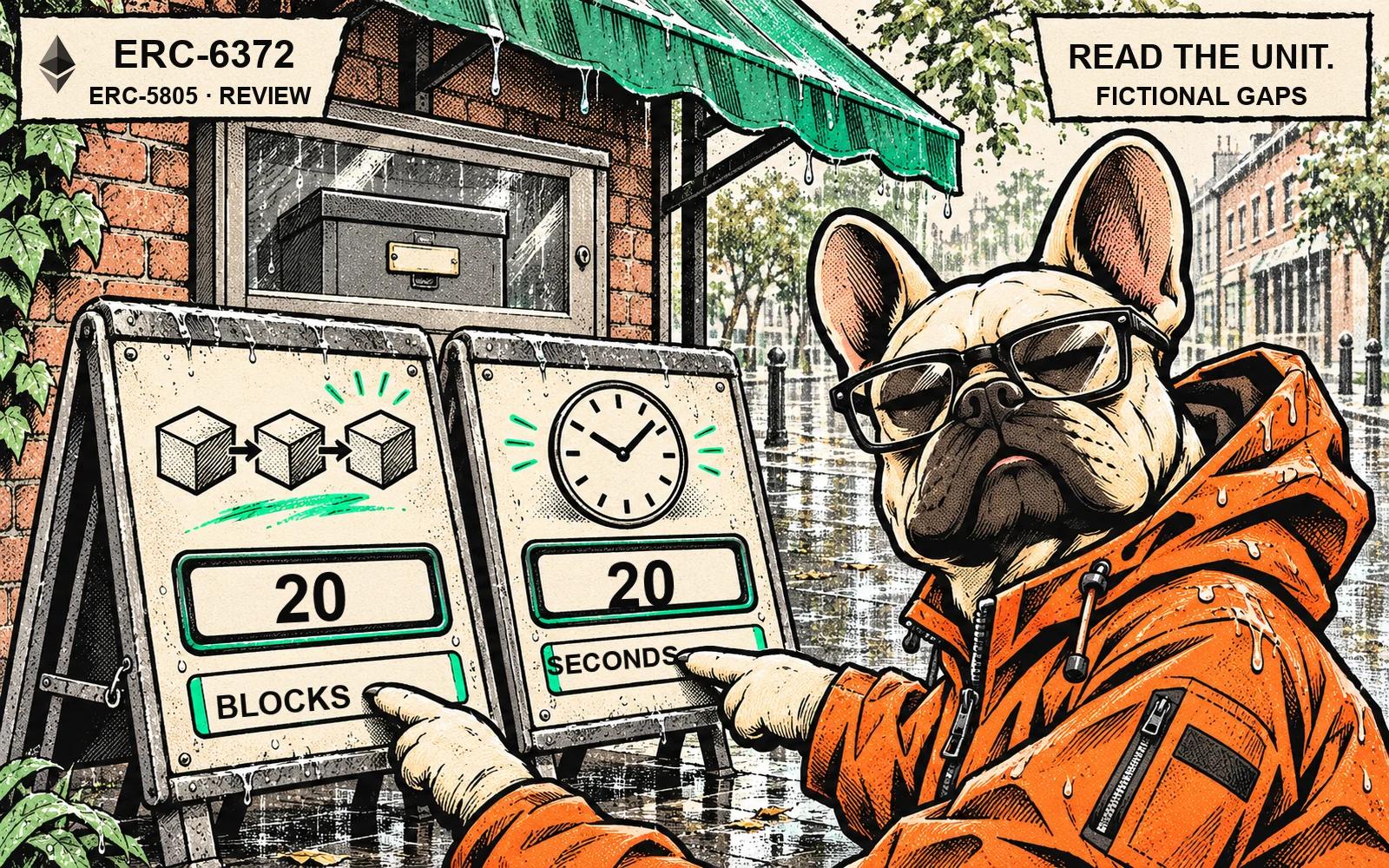
Our cover makes the same joke: two counters can show the same number while counting different things. Check the label before you trust the countdown.
A snapshot is not today's token balance
ERC-5805 addresses voting-weight tracking with delegation. It distinguishes an account's token balance from the voting weight delegated to it, and uses checkpoints for historical lookups.
In that proposed interface:
getVotes(account)returns current voting weight.getPastVotes(account, timepoint)returns historical voting weight at the requested timepoint.- The
timepointargument must match the contract's operating mode.
Passing a timestamp to a block-number lookup does not ask the same question as passing the intended block number. ERC-5805 warns that one kind of mismatch is likely to revert; the reverse mismatch is likely to return zero. Neither outcome, on its own, proves that an account had no eligible votes.
Its method specification says past-vote lookups should only serve past checkpoints and should revert when the requested timepoint is greater than or equal to the current clock. Those are SHOULD-level statements in that section, not a universal guarantee about every contract's error handling. Its expected-properties section separately requires a past result to remain constant once the clock has overtaken that timepoint.
For a real proposal, find the documented snapshot field and the contract that supplies its voting weight. Knowing the clock's unit is necessary to read that snapshot; it is not enough to establish eligibility, quorum or the result.
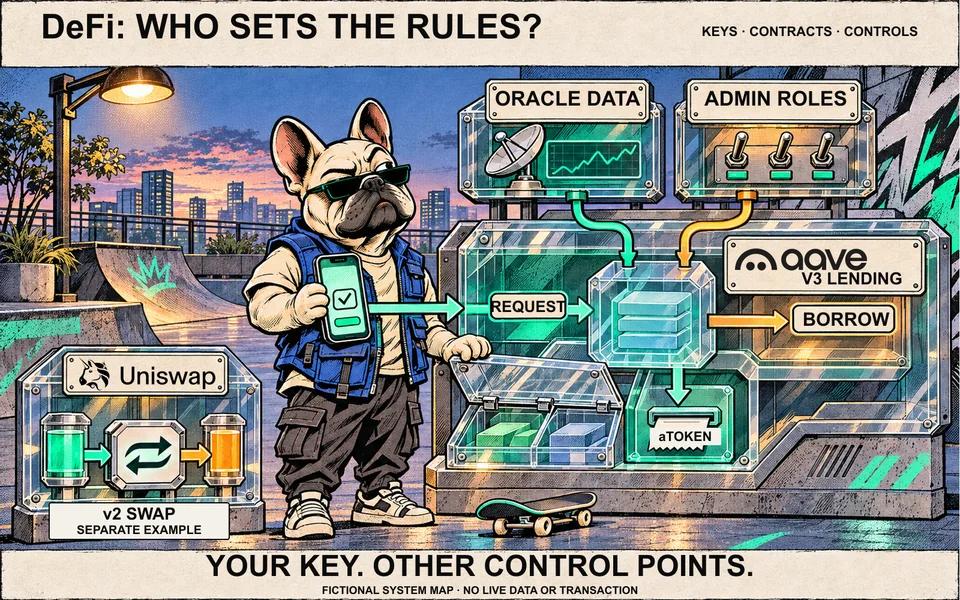
If the broader governance setup is unfamiliar, our DeFi explainer on who holds the keys and sets the rules covers that separate question.
The fallback is a specification rule, not an error diagnosis
ERC-5805 says compliant contracts should implement ERC-6372 to announce their vote-tracking clock. Within ERC-5805's compliant-interface model, a contract that does not implement ERC-6372 must use a block-number clock, as though its descriptor were mode=blocknumber&from=default.
That is a condition of the proposed specification. One failed attempt to read CLOCK_MODE() does not establish that an arbitrary contract follows ERC-5805 or uses its fallback. You still need to establish the contract, interface and implementation you are examining.
Likewise, the word “deadline” on a governance website does not automatically make the field an ERC-6372 timepoint. The application may display a derived date, a countdown or another contract's value. Follow its documented mapping back to the relevant field and clock.
What to check before interpreting a deadline
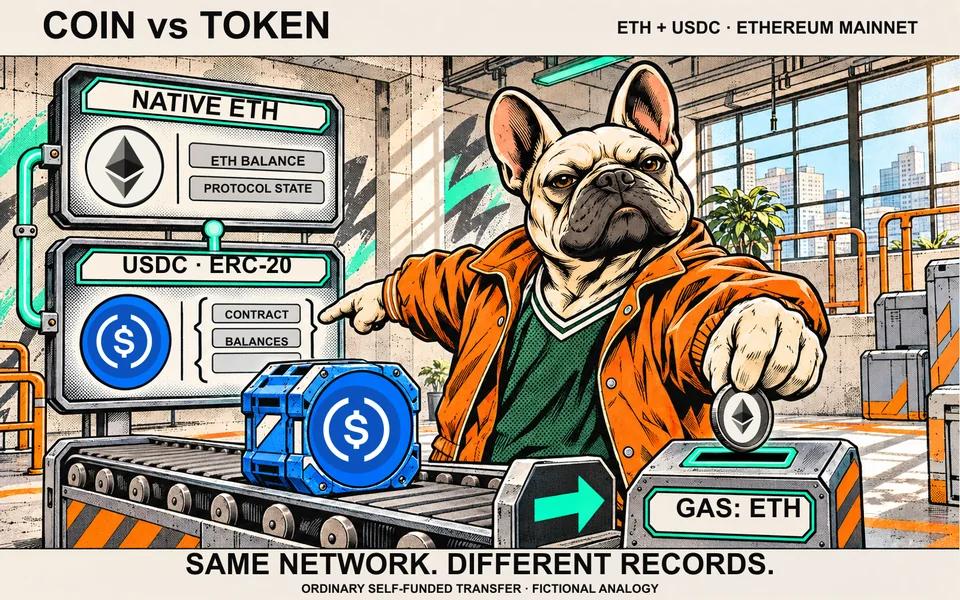
- Identify the system. Record the actual chain, contract and proposal. A ticker alone does not identify a governance implementation; coin versus token explains the network–contract distinction.
- Identify the field. Is this a snapshot, voting endpoint, execution delay or merely a date calculated by the interface?
- Establish its clock. Use the documented clock interface and mode where applicable. For block-number mode, establish the block source too.
- Keep units consistent. Compare the endpoint with a current reading from the same relevant clock. Do not substitute a calendar timestamp for a block number.
- Read the action's rules. Check the implementation's boundary and eligibility conditions before interpreting what that comparison permits.
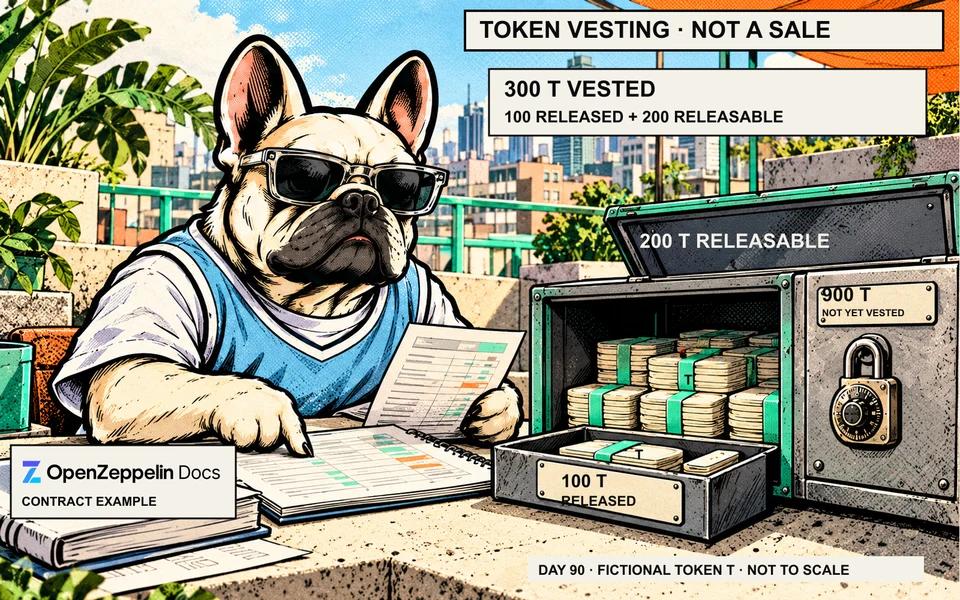
A token vesting schedule answers when an allocation unlocks under its own rules. It is not a substitute for a governance checkpoint, and an unlocked balance does not establish the voting weight of an account at a past snapshot.
What this explanation does not verify
This is a documentation-based reading guide. We did not query a live clock or governor, inspect a particular deployment, delegate voting weight, connect a wallet or cast a vote. No example establishes adoption by a named project or a current proposal's end time.
The useful habit is small: whenever a governance interface gives you a number, ask which clock, which unit, and which rule? A countdown is only useful once you know what it is counting.
Sources
- ERC-6372: Contract clock — Review; interface, non-decreasing clock and descriptor requirements.
- ERC-5805: Voting with delegation — Review; voting-weight checkpoints, timepoint consistency and the specified block-number fallback. This explainer covers its clock-related provisions.
See something wrong? Brokzi logs material changes. Prepare a correction note.