
Zero tokens does not necessarily mean zero SOL. A Solana token account can have a token amount of zero while still holding lamports, the units used for its SOL balance. Closing a qualifying account sends those lamports to a named destination. It does not sell tokens or refund a network fee.
If you are trying to understand a wallet’s “close account” or “reclaim rent” label, start with three questions: which balance, whose authority, and which destination? An empty token shelf and the account’s storage balance are different records.
What balance does closing a token account return?
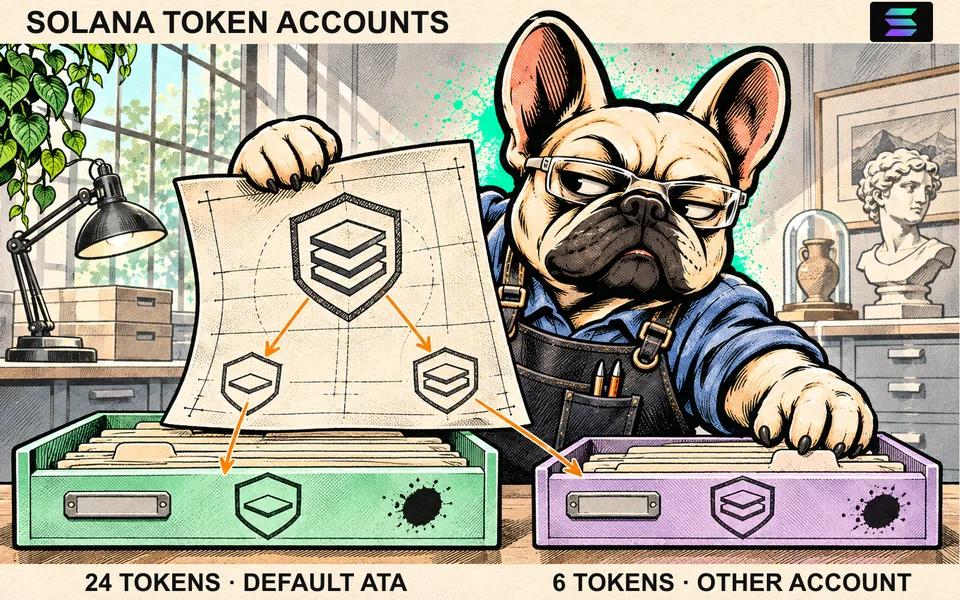
The Token Program stores the token’s mint, amount, owner and optional close_authority inside the account’s data. The account also has a lamport balance outside that token data. The token-account state definition shows the token fields; Solana’s account model separates lamports from data.
In the checked original Token Program implementation, CloseAccount adds all the source account’s lamports to the destination, sets the source lamports to zero and deletes the source account. That includes the balance supporting its storage. The returned amount is the source’s actual lamport balance, not a universal fixed payout. See the pinned close-account processor.
Closing one balance record does not close its mint or the rest of a wallet. For those roles, see Solana mint, owner and token accounts.
Who can authorize the close, and who receives the lamports?
For the ordinary authority case used here, the processor selects the account’s explicit close authority, if one is set. Otherwise, it uses the owner stored in the token data. The required authorization must validate. A transfer delegate’s allowance is a different permission.
That token-data owner is not the same field as the Solana account’s program owner. The latter identifies the program governing its data. Keeping the two owner fields separate avoids mistaking a program ID for the authority in this example.
The instruction’s destination is another role. It receives the lamports when closure succeeds and must differ from the source. The program does not select the recipient by looking up who originally funded the account. Being the creator or initial funder therefore does not automatically make someone the recipient. These roles and checks appear in the same close-account processor.
A fictional closure: three million lamports move
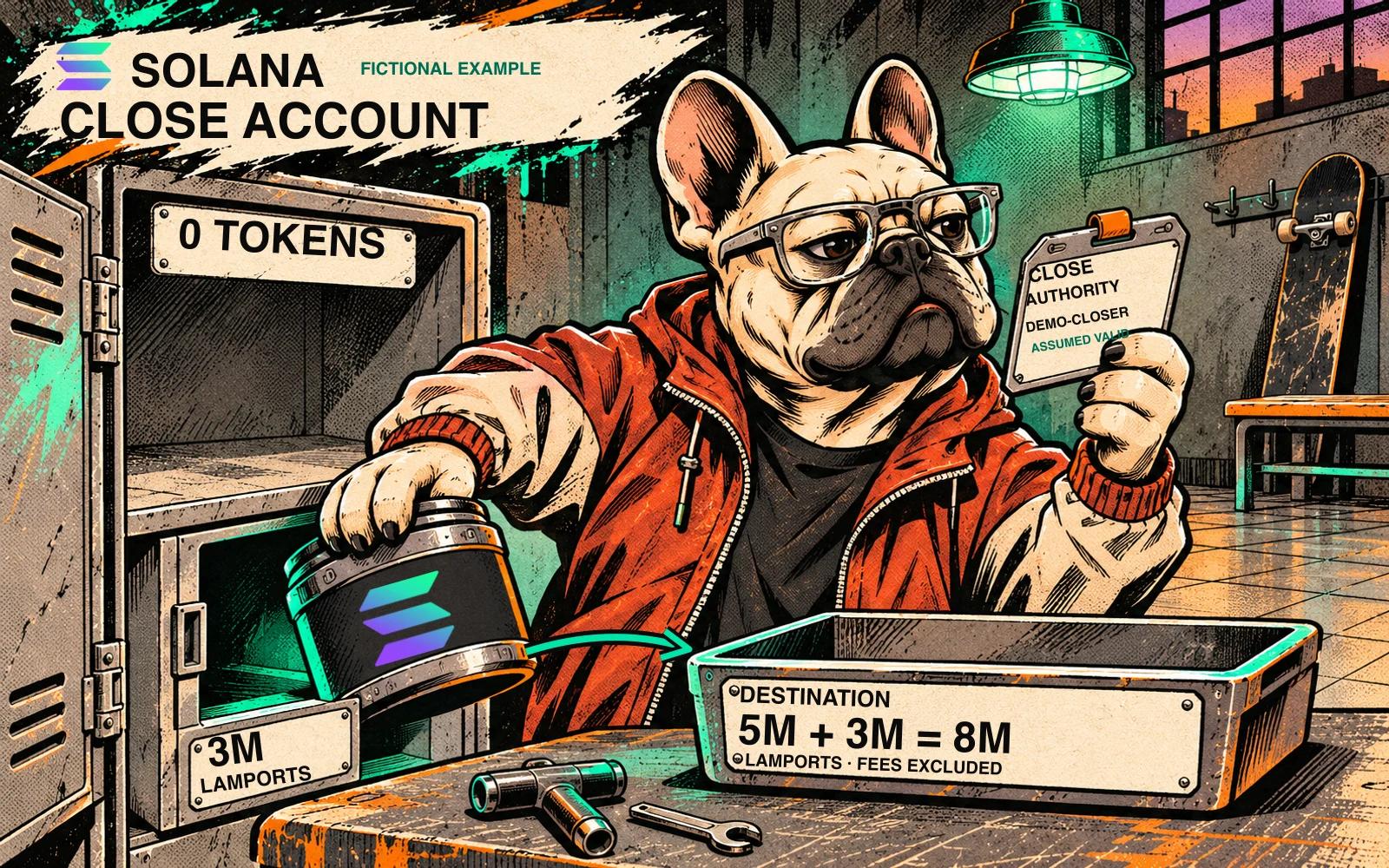
Use one ordinary, non-native account under the original Token Program. Its token-data owner is DEMO-OWNER, and it has a separately assigned close authority, DEMO-CLOSER. Its instruction destination is DEMO-DESTINATION, a different account. These labels are deliberately unusable as addresses.
Assume DEMO-CLOSER supplies the required valid authorization and all other conditions pass. There is no multisignature, system-owner or incinerator variation in this example.
| Record | Before | After the close effect |
|---|---|---|
| Source ordinary token amount | 0 base units | Token account closed |
| Source lamport balance | 3,000,000 lamports | 0 lamports |
| Destination lamport balance | 5,000,000 lamports | 8,000,000 lamports |
The destination calculation is 5,000,000 + 3,000,000 = 8,000,000 lamports. The values are invented, including the source balance; 3,000,000 is not a quoted storage minimum.
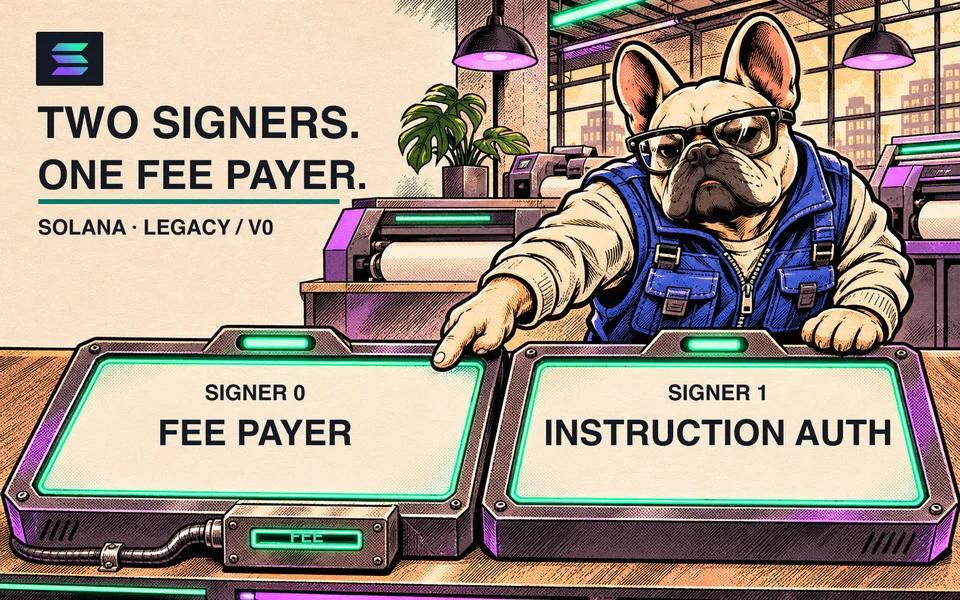
The table isolates the close instruction’s effect. It excludes transaction fees and unrelated balance changes. If the destination also pays a network fee, its observed net change needs that separate debit accounted for. Our Solana fee-payer explainer covers that different question. Closing the account does not refund a fee previously paid to process a transaction.
Does zero token amount guarantee closure?
No. For this ordinary non-native account, zero is a base requirement, not the whole checklist. The required authority, destination and other validation still matter. Changing only its ordinary token amount from 0 to 1 base unit would make the original Token Program reject closure with NonNativeHasBalance.
Wrapped SOL is a specific exception. The original processor skips that nonzero-amount rejection for native token accounts, allowing closure to return their underlying SOL. Do not apply the exception to an ordinary non-native token balance.
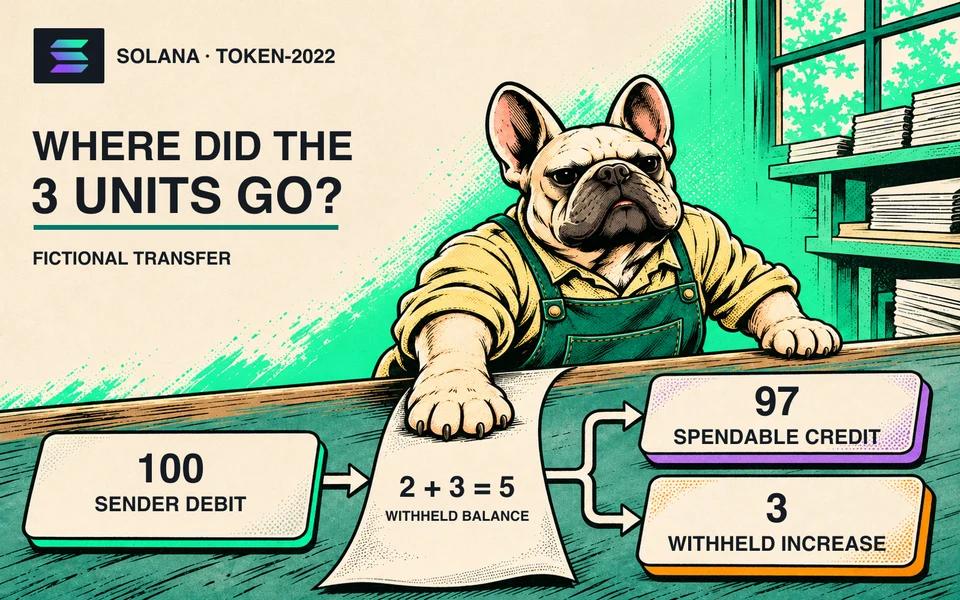
Token-2022 has additional checks. Its close-account processor checks relevant extension state. In particular, TransferFeeAmount.closable() requires withheld_amount to be zero; otherwise it returns AccountHasWithheldTransferFees. The extension’s pinned definition makes that condition explicit.
An ordinary token amount of zero therefore does not prove a Token-2022 account is closable. The withheld field is separate, as explained in where a Token-2022 transfer fee appears. No transfer, burn, sale or fee-harvesting operation is demonstrated here.
When reading a closure claim, identify the program and account type, then the token amount, lamport balance, applicable authority and destination. Those records explain what can move and where; a wallet’s short label cannot replace them.
Sources
The full pinned source files and relevant close/state checks were reviewed on 18 November 2026. Repository revisions matched the current heads at that check. This is a source-based explanation, not an executed onchain test. No real account, address, RPC request, transaction, wallet operation or signature was created or used.
- Original Token Program: processor — amount check, authority selection, destination and lamport movement.
- Original Token Program: account state — token amount, owner, native status and close authority.
- Token-2022: processor — extension checks during closure.
- Token-2022: transfer-fee extension — withheld-amount close condition.
- Solana: Accounts — lamports, account data and program ownership.
See something wrong? Brokzi logs material changes. Prepare a correction note.