
The preview says the call succeeds. That answers a narrower question than "should I sign it?"
A crypto transaction simulation estimates what specified instructions do under selected conditions. For readers reviewing an Ethereum wallet screen, the useful follow-up is which instructions and conditions the tool actually used. A green result is not a safety certificate for the website, spender or future transaction.
This explainer separates offchain execution previews from checks that a contract or account enforces during real execution. It uses current protocol and provider documentation, not a wallet test or a recommendation to sign anything.
A simulation is not a submission
The Ethereum Execution APIs describe eth_call as executing a message call without creating a blockchain transaction. A node can run the code and return data or an error while leaving the proposed changes uncommitted.
That differs from the transaction lifecycle: authorization, broadcast and inclusion are separate steps. A successful simulation does not reserve block space, broadcast the request or prove the signer authorized it. No live transfer takes place merely because a preview shows one.
Nor is a raw RPC result automatically a friendly balance summary. The documented eth_call result is returned data. A wallet or simulation service interprets execution information and presents the parts it supports. The screen is another layer between the call and the reader.
Which state did the tool use?
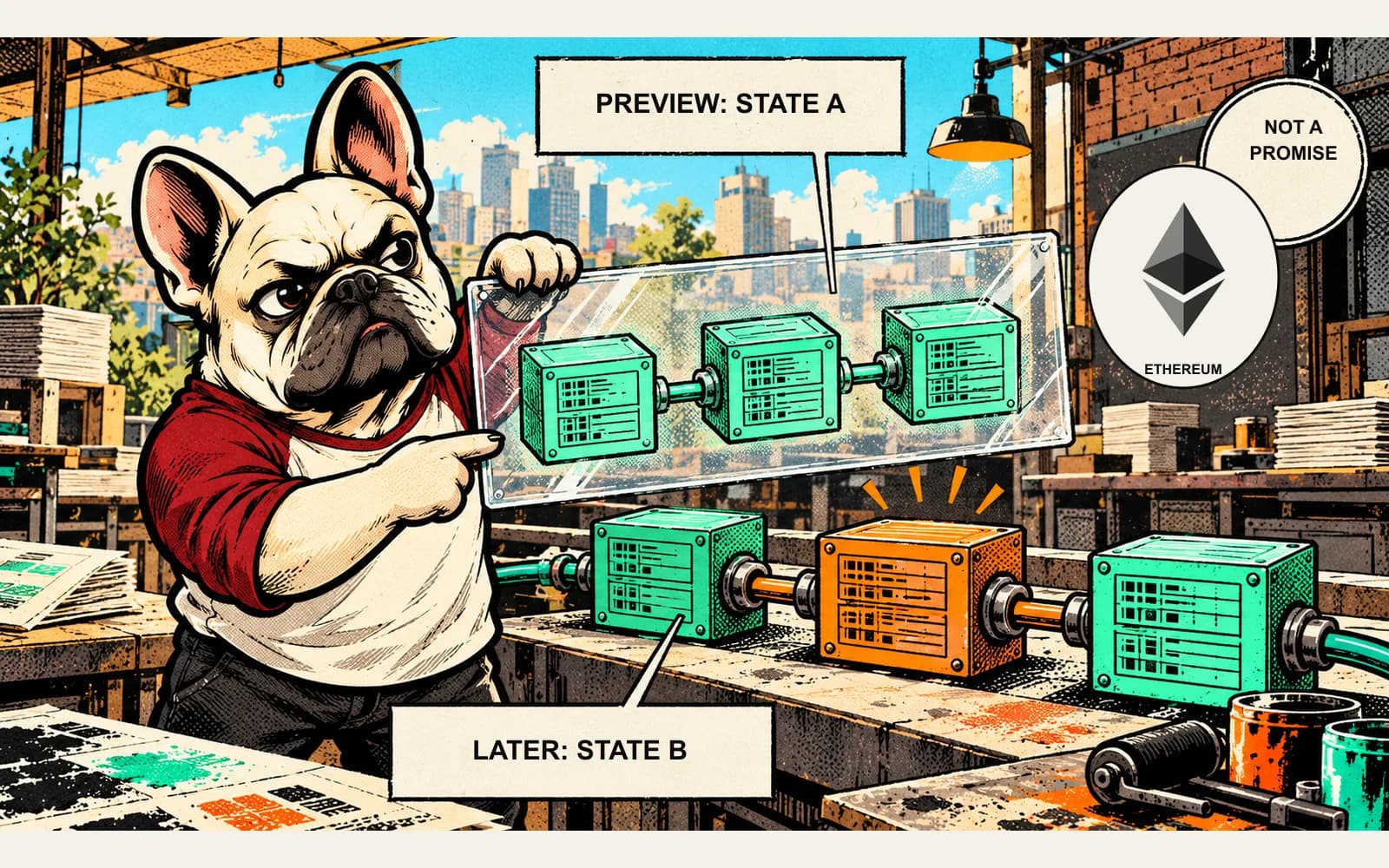
State means the account, contract and storage values against which the call runs. A block selector identifies the context. latest refers to the most recent canonical block observed by that client; it is not a fixed future execution point. pending is a sample next block based on that client's view, not a promise of the final order.
The same request can produce a different result after another transaction changes a pool, allowance, balance or contract state. Recording a block hash makes the observation more specific. It does not freeze the world until your later transaction arrives.
Geth's RPC documentation also supports state overrides and block overrides. These temporarily substitute values in the simulation, such as account state or block context. An override is useful for a hypothetical test, but a balance supplied only by that test is not money the account acquired onchain.
A more detailed simulation still has settings
Geth's eth_simulateV1 can execute a sequence of calls in simulated blocks, with later calls building on earlier simulated state. That can reveal dependencies that a single isolated call misses. It still does not create real transactions or blocks.
Its validation option matters. According to Geth, validation defaults to false. Turning it on applies more normal execution validation but still omits signature and contract-sender checks. A passed run therefore does not prove that a real signed request will be accepted.
The Execution APIs' simulation notes describe defaults and overrides, including a zero base fee when validation is disabled. A simulated gas figure needs that context before anyone treats it as a real fee estimate. Clients can also impose their own request and gas limits; an error can describe a service limit rather than a contract's final outcome.
| Question | Evidence to look for | What it does not establish |
|---|---|---|
| What was simulated? | Network, sender context, destination, value and call data | That a friendly project name identifies the actual recipient |
| Against which state? | Selected block or hash, observation time and pending-state assumptions | That later execution sees identical state |
| What was substituted? | State overrides, block overrides and defaults | That the hypothetical balances or context exist onchain |
| What was checked? | Validation mode and provider scope | That signatures, inclusion and every security risk were checked |
| What was displayed? | Supported balance, permission and execution details | That an omitted effect cannot occur |
An interface may not expose every field. Missing context means the preview's scope is unclear; it is not evidence that no overrides or limitations exist.
No tokens moving can still mean permission changing
Consider a fictional standard ERC-20 token. The holder starts with 100 tokens, and the allowance for spender S is 0 tokens. A proposed approval sets that spender's allowance to 100 tokens.
Under the ERC-20 interface, approval and transfer are different operations. In this isolated example, the simulated token balance can remain 100 while the simulated allowance becomes 100. A balance-only display could show no tokens leaving while missing the permission that concerns the reader.
The simulation itself does not commit that allowance. If an actual approval later executes successfully, the spender can use the resulting authority within the token's rules. This example does not supply a real address, approval request or theft forecast. It explains why an unchanged balance is not the same as unchanged access. Our token-approval guide covers the exact owner, token and spender relationship.
Offchain previews and enforced conditions are different
MetaMask's simulation documentation distinguishes ordinary offchain previews from an onchain enforcement feature for its supported smart-account context. It describes malicious contracts that can behave differently in a simulation environment, and says its added protection can reject a mismatch during execution.
That is a provider's description of a specific feature, not evidence that every account, wallet version or route has identical enforcement. We did not test that feature. A condition also protects only what it actually checks: matching an expected result does not make an unwanted approval desirable.
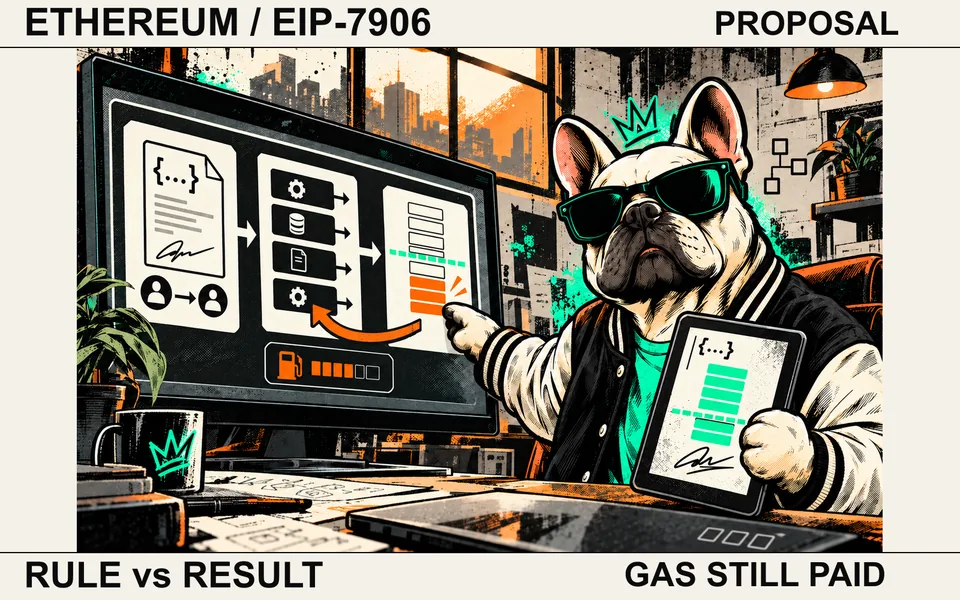
Separately, EIP-7906 remains Draft in the specification checked October 26. It proposes native transaction assertions. Its status is not proof that a universal Ethereum protection has shipped. Brokzi's earlier assertions report is dated research coverage, not a current availability guide.
Can a simulation prevent slippage or MEV?
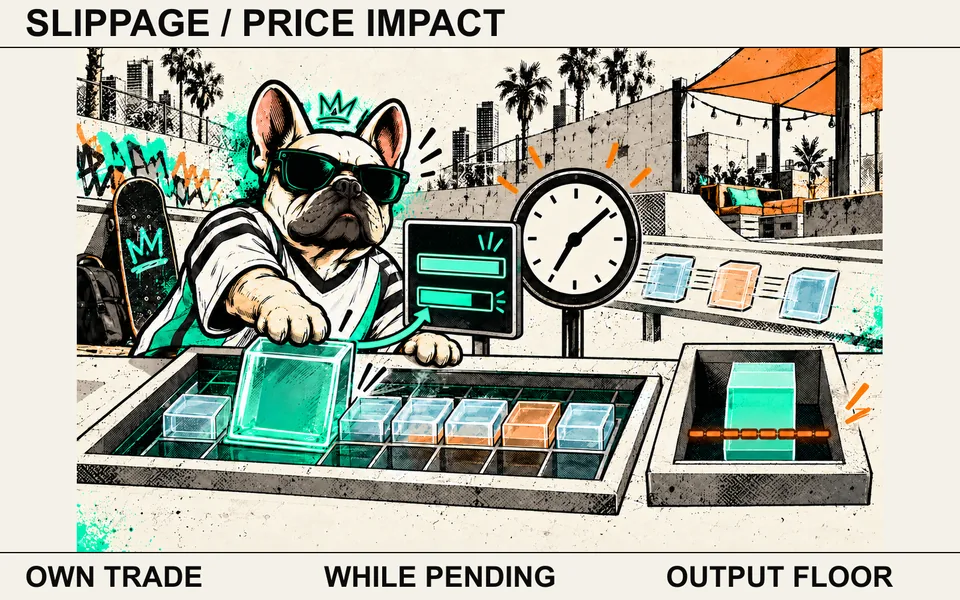
A preview does not lock the transaction's eventual position or stop other activity changing its starting state. An enforced minimum output can reject a result outside its bound; a preview alone cannot add that protection. The slippage explainer separates the quote from the actual execution limit. Neither a green preview nor a bound proves that every ordering risk has disappeared.
Does a failed simulation cost network gas?
A call that only simulates and submits nothing creates no included transaction to charge for that action. A provider can have its own service terms or fees. A later transaction that is included and reverts is different: it can consume paid gas. See reverted Ethereum transactions before interpreting an error as a refund or a free retry.
Read the preview as a scoped report
Keep the exact request separate from its label, and ask what state and settings produced the result. Read permission changes as well as transfers. Distinguish estimated effects from conditions that execution must satisfy. If the tool cannot establish those details, do not turn missing information into a safety claim.
Crypto transaction simulation is useful because it makes specified behavior inspectable before submission. Its usefulness depends on keeping those assumptions visible, rather than asking one green badge to certify the entire decision.
Sources
Primary documentation checked October 26, 2026, Asia/Tbilisi. Geth behavior is implementation-scoped; Execution APIs pages identify their specification version. Provider descriptions are not independently tested guarantees. EIP-7906 is a proposal, not activation evidence. The token example and artwork are fictional. No RPC request, wallet connection, signature, settings change or transaction was performed. Education, not financial or security assurance.
- Geth: eth_call and eth_simulateV1, defaults and overrides.
- Ethereum Execution APIs: eth_call and block selectors.
- Ethereum Execution APIs: simulation notes and validation mode.
- Ethereum.org: transaction lifecycle.
- MetaMask: transaction simulations and enforced-simulation scope.
- ERC-20: approval, allowance and transfer interfaces.
- EIP-7906: current Draft transaction-assertion specification.
See something wrong? Brokzi logs material changes. Prepare a correction note.