What happened
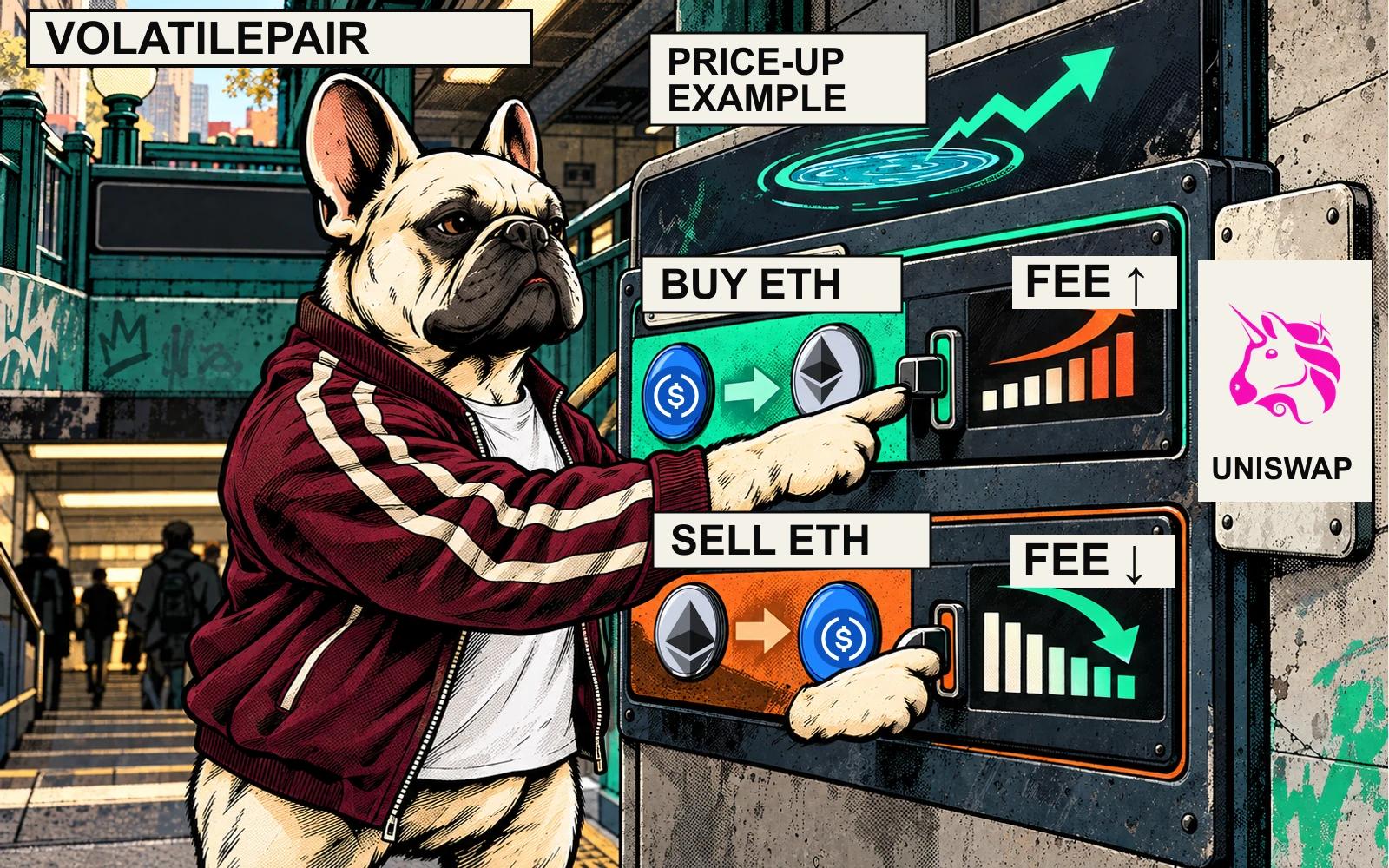
Uniswap Labs announced on October 14, 2026 that its VolatilePair Hook is live on Ethereum, initially for ETH/USDC. The Uniswap v4 hook uses recent pool-price moves to recalculate separate buy and sell fees on every swap, the company says.
The verified item here is the dated company announcement—not an independent deployment check. This report concerns the newly announced mechanism, rather than treating September's StablePair announcement as fresh news.
What is confirmed—and by whom
Labs describes a higher fee for buying ETH and a lower one for selling when the pool's price rises; a fall reverses that relationship. It also describes a temporary fee for trades reversing a large move, and governance-upgradeable parameters and fee logic.
Those are attributed design statements. They do not establish that a particular governance change has passed or that every Uniswap pool uses the hook.
The Labs hooks overview was read for background. It does not yet name VolatilePair, so it is not a second confirmation of this deployment. Its other hook entries should not be used to infer VolatilePair's contract behaviour.
Why it matters: four labels, four jobs
A directional fee can change one part of a quote. It does not turn every number on a swap screen into the same thing.
| Label | What it describes |
|---|---|
| Pool swap fee | The pool's charge for that swap, under its fee mechanism |
| Price impact | The trade's own effect on the available price |
| Slippage tolerance | An execution bound, not another fee |
| Network gas | Payment for onchain transaction execution, separate from the pool fee |
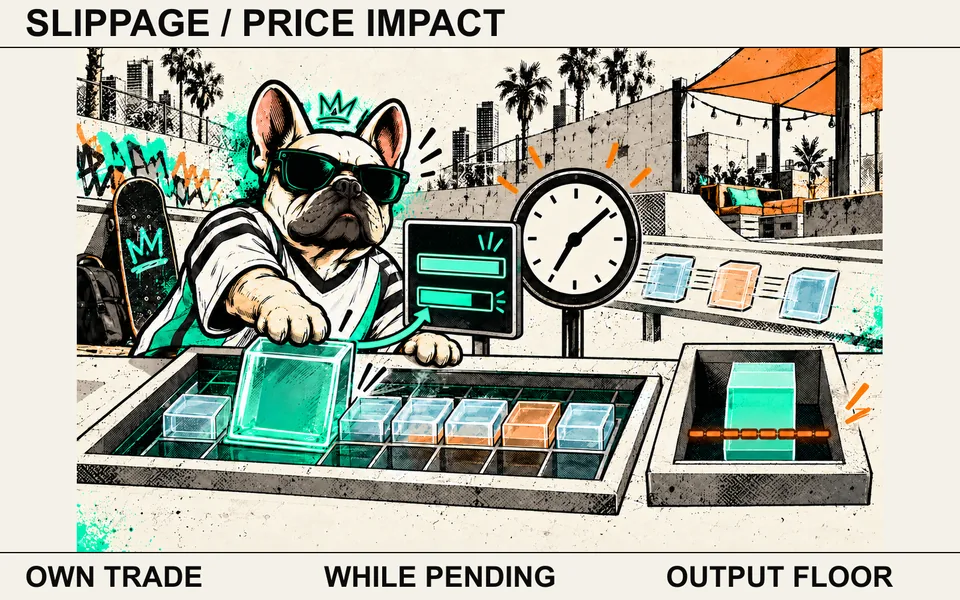
Our slippage versus price-impact explainer separates a quote from its execution boundary. Network fees explained covers the different cost of processing the transaction. Read those as distinct questions, not percentages to add mechanically.
What remains unknown
The sources checked here do not establish a fixed fee table, an independent security assessment or better returns for liquidity providers. Brokzi has not executed swaps, inspected deployed contracts or verified an upgrade proposal.
The announcement gives a day, not a precise rollout hour or a complete cross-platform schedule. No universal wallet or all-pool change is inferred. A starting ETH/USDC pair is a specific scope; USDC's name does not make its pairing with ETH a fixed-price stable pair. How stablecoins work explains why a token's target and a market price are different.
Brokzi's Take
The interesting change is direction-aware pool pricing. The useful habit is more boring: keep pool fees, trade impact, execution limits and gas separate. Two fee directions do not amount to a free trade, guaranteed execution or a promise of better returns.
Sources
Primary sources checked October 14, 2026. This is reporting on a company announcement, not a trading recommendation, wallet test or code audit. Its day is known; its hour is not. No account was connected, liquidity supplied, signature created or transaction submitted.
- Uniswap Labs: VolatilePair Hook—Pricing Both Sides of the Trade, dated October 14, 2026. Launch scope and design statements attributed to Labs.
- Uniswap Developers: Labs hooks overview, checked October 14. Limited background; the captured list does not name VolatilePair.
See something wrong? Brokzi logs material changes. Prepare a correction note.