
The Bridge button makes a crosschain transfer look like a move between accounts. Behind it, two networks keep separate records, and a system decides when the destination may credit an asset.
Blockchain bridge risks depend partly on that system. What remains on the source chain? What arrives on the other side? Who verifies the message? This guide compares an Ethereum-origin ERC-20 transfer through Optimism's Standard Bridge with a USDC transfer through Circle's Cross-Chain Transfer Protocol (CCTP). They are examples of different mechanisms, not a ranking or a recommendation to use either service.
Lock-and-mint: an original token stays behind
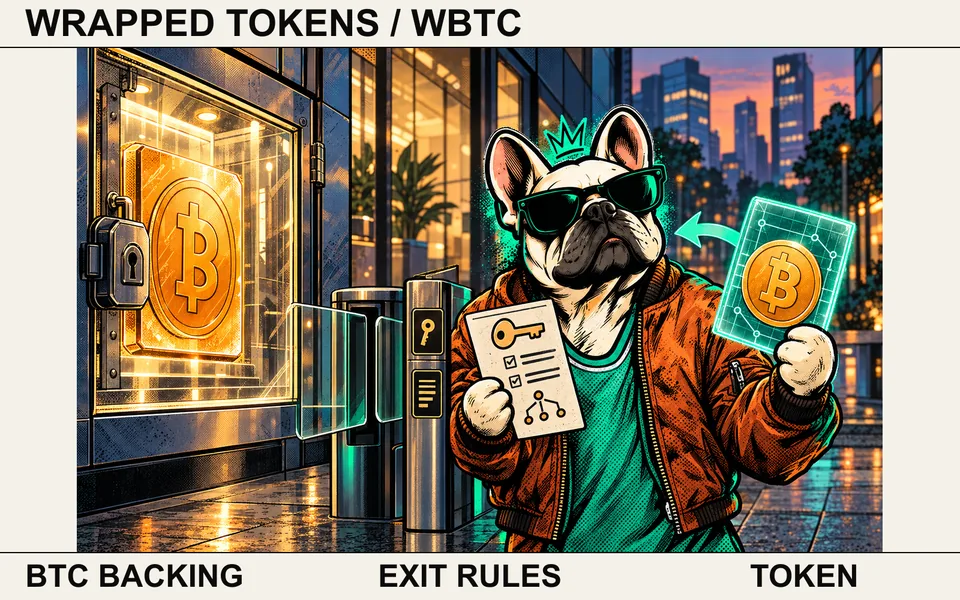
In a lock-and-mint flow, the source contract holds the original tokens in escrow. An authenticated crosschain message then allows a corresponding representation to be minted on the destination.
Optimism's Standard Bridge documentation describes this for supported ERC-20 token pairs. For an Ethereum-origin ERC-20 deposit, the L1 bridge locks the token, and the L2 bridge mints its compatible representation on OP Mainnet.
"Ethereum-origin" here means an ERC-20 originally issued there. It does not mean ETH, the network's native coin; the bridge has a separate ETH path.
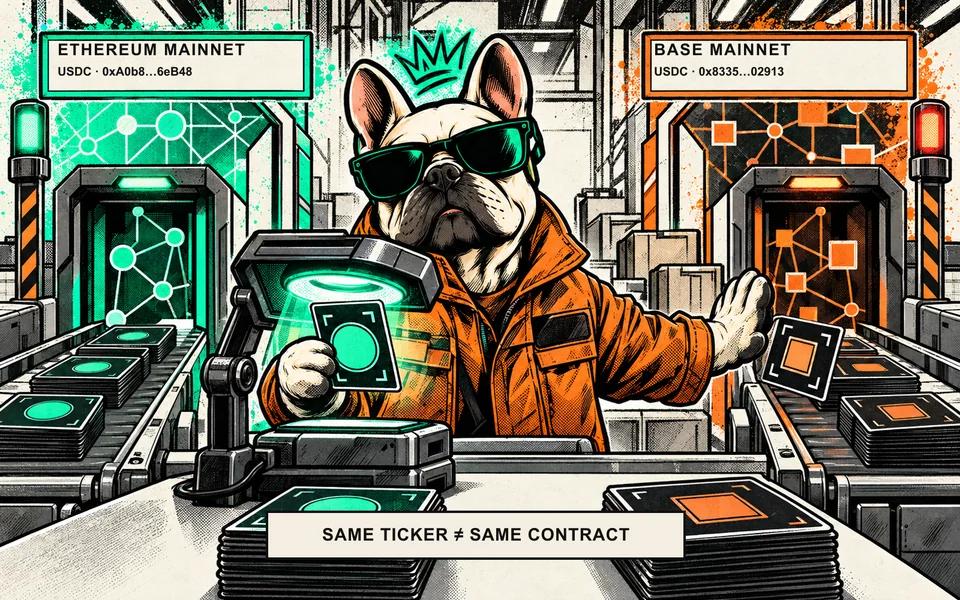
The receiving token must implement the bridge's required interface and identify its original counterpart. A familiar ticker is not enough. Optimism's documentation also explains that different bridged representations of the same original asset are independent tokens. Match the actual pair using the network and contract checks, rather than assuming every similarly named token has the same backing.
For the reverse flow, the representation is burned and the original tokens are released after the withdrawal message completes. The OP Stack specification describes these lock, mint, burn and unlock actions. The round trip depends on the contracts and crosschain messaging, not on a coin physically travelling between networks.
Burn-and-mint: the source balance is removed
For USDC, Circle CCTP uses a different flow: burn USDC on the source chain, then mint native Circle-issued USDC on a supported destination.
Here, "native USDC" means Circle issues the token directly on that chain. It does not mean USDC is the network's native gas coin.
Circle's technical guide describes the sequence:
- The source contracts burn USDC and emit a crosschain message.
- Circle's offchain attestation service signs the message once it meets the required confirmation level.
- The message and attestation are submitted to the destination contracts, which process the mint.
An attestation is a signed statement the destination contracts verify. It is not the user's wallet signature or a general security certificate.
For example, Circle's supported-chain directory includes Ethereum and Base. A supported CCTP USDC transfer between them uses burn-and-mint rather than leaving the transferred units in a bridge escrow as backing for a new wrapper. The protocol can deduct a transfer fee from the amount received; read the current route quote instead of assuming the recipient gets the full amount burned.
This comparison concerns CCTP's USDC flow. Its documentation also covers other assets and integrations, whose mechanics should not be inferred from the USDC example.
What changes between the two examples?
| Check | Ethereum-origin ERC-20 through Optimism Standard Bridge | USDC through Circle CCTP |
|---|---|---|
| Source action | Lock the original token in the bridge | Burn USDC on the source network |
| Destination action | Mint the configured bridged representation | Mint native USDC after message and attestation verification |
| What to inspect | Original and representation contracts, escrow and crosschain messaging | Supported asset and domains, contracts, Circle attestation and finality requirement |
| Return path | Burn the representation and complete the unlock process | A further burn-and-mint transfer on a supported reverse route |
| Important limit | The representation depends on its bridge backing and correct execution | Avoiding a bridge liquidity pool does not remove contract, chain or issuer dependencies |
Other bridges can use liquidity pools, swaps or combinations of mechanisms. A route described as "bridge" may also include a swap, so check the output asset and each step the interface lists. These two examples do not classify every bridge.
Where the extra trust comes from
Ethereum's bridge guide identifies contract failures and external-verifier dependencies among bridge risks. A useful check is specific: which contracts hold or mint tokens, and what evidence allows a destination action?
For the Standard Bridge example, inspect the token pair, crosschain messenger and withdrawal path. The OP Stack bridge specification places both bridge contracts behind upgradeable proxies. Code, permissions and upgrade arrangements therefore matter alongside the token's name. Its ERC-20 support is also not universal: the documentation excludes fee-on-transfer and rebasing tokens.
For CCTP, Circle's attestation service is part of the verification path. Calling the protocol permissionless means applications can integrate it; it does not remove that service from the flow. Circle distinguishes Fast Transfer and Standard Transfer finality requirements. A faster attestation is not evidence that all risk disappeared.
Neither an audit badge, a large project logo nor a familiar token symbol answers every question. The logos in this article identify the documented examples, not sponsors or endorsements.
Check the route before signing
- Confirm the source network, destination network, exact token contracts and receiving account. A wrapped representation may not be the token your destination expects.
- Read the quote's output asset, fees, speed option and additional actions. Distinguish a bridge transfer from a route that also swaps or deposits funds.
- Check what authorises spending. An ERC-20 approval permits a spender to use an allowance; it does not prove the bridge transfer completed.
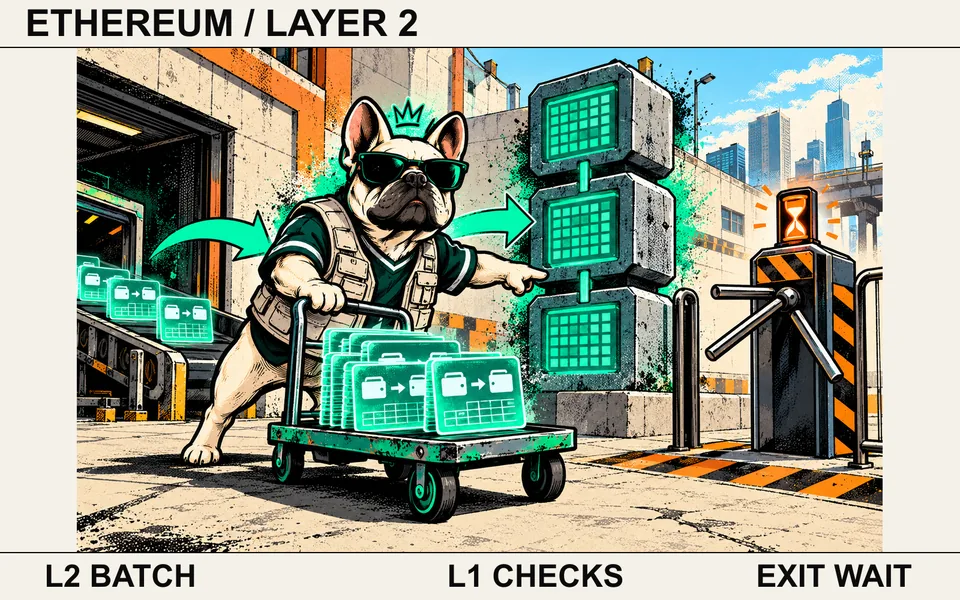
- Understand the return route before using the outbound one. A standard L2 withdrawal can involve waiting and separate steps; an alternative route can introduce different dependencies. The Layer 2 guide explains why execution and withdrawal are different questions.
- Track the source action and the destination result. A confirmed lock or burn is one stage, not proof that the receiving wallet or exchange has credited the intended asset.
Use official protocol documentation and the current interface's instructions to investigate a delayed transfer. The path depends on the bridge and its state. Do not assume every stalled transfer can be cancelled or recovered, and never disclose a recovery phrase to someone offering to "fix" it.
Two common questions
Does changing my wallet's network bridge the token?
No. Changing the selected network changes the records your wallet displays. A bridge needs actions on the source and destination networks and a system connecting them. Seeing the same account address on both chains does not make their balances interchangeable or establish that a receiving service supports the asset.
Is burn-and-mint automatically safer than lock-and-mint?
No. Burn-and-mint describes how token supply changes, not a complete security model. Check who verifies the burn, which contracts mint, what finality they require and how the route handles delays. Lock-and-mint requires its own checks of escrow, representation and messaging. Evaluate the implementation rather than the label.
Before bridging, be able to name the destination asset, its verification path and the return route. If the interface leaves one of those unclear, resolve it in the official documentation before signing.
Sources
- Ethereum: Bridges
- Optimism: Using the Standard Bridge
- OP Stack specification: Predeploys and L2StandardBridge
- OP Stack specification: Standard Bridges and upgradability
- Circle: Cross-Chain Transfer Protocol
- Circle: CCTP technical guide
- Circle: Supported blockchains and domains
- Circle: Finality and block confirmations
See something wrong? Brokzi logs material changes. Prepare a correction note.