An ERC-20 label tells an application which token interface to expect. It does not tell a holder who can stop transfers or what a particular transfer will deliver.
A token blacklist, a pause switch and a transfer fee answer different questions. This explainer is for readers checking the rules behind a token's label. It uses a pinned OpenZeppelin code example to show where behavior is added, then a separate fictional fee example. It does not inspect a deployed token or identify a restricted address.
Start with what ERC-20 actually specifies
The ERC-20 standard defines balance, supply, transfer and allowance methods, plus Transfer and Approval events. It specifies behavior as well as function names. Its transfer methods return a success boolean; callers must handle a possible false result rather than assuming that outcome never occurs.
The standard does not require a token blacklist, a pause administrator or a transfer levy. Nor does it supply one universal function for discovering those controls. A familiar interface is not evidence that every implementation has identical rules.
Calling a token "ERC-20" also does not prove that arbitrary custom behavior fully complies with the specification. In particular, a token advertised under that label can have integration problems. Read the implementation and the receiving application's documented assumptions instead of treating the badge as a compatibility certificate.
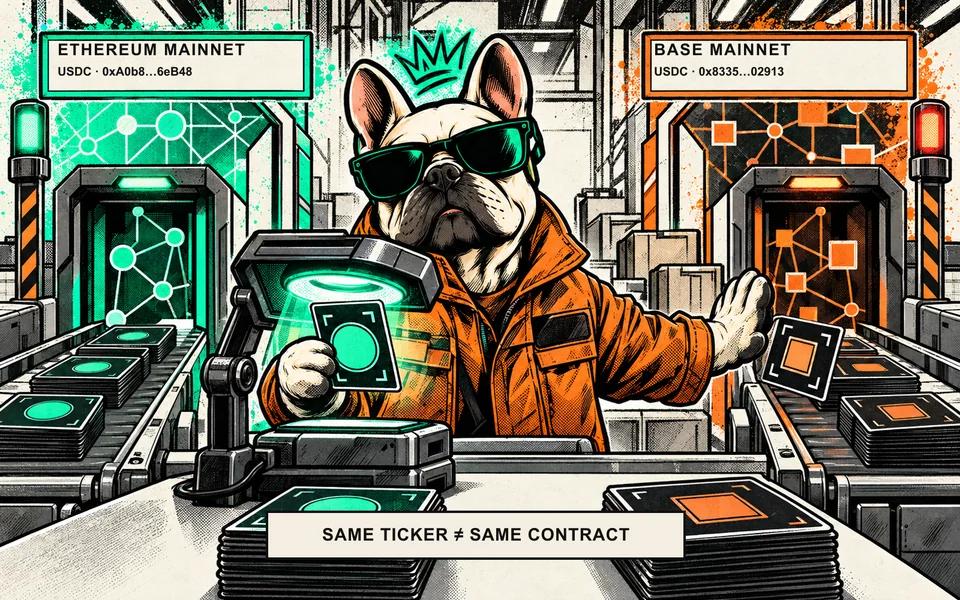
Our token identity guide owns the earlier step: matching the complete contract and network. This page asks what the identified code does.
Follow the transfer path in one specific implementation
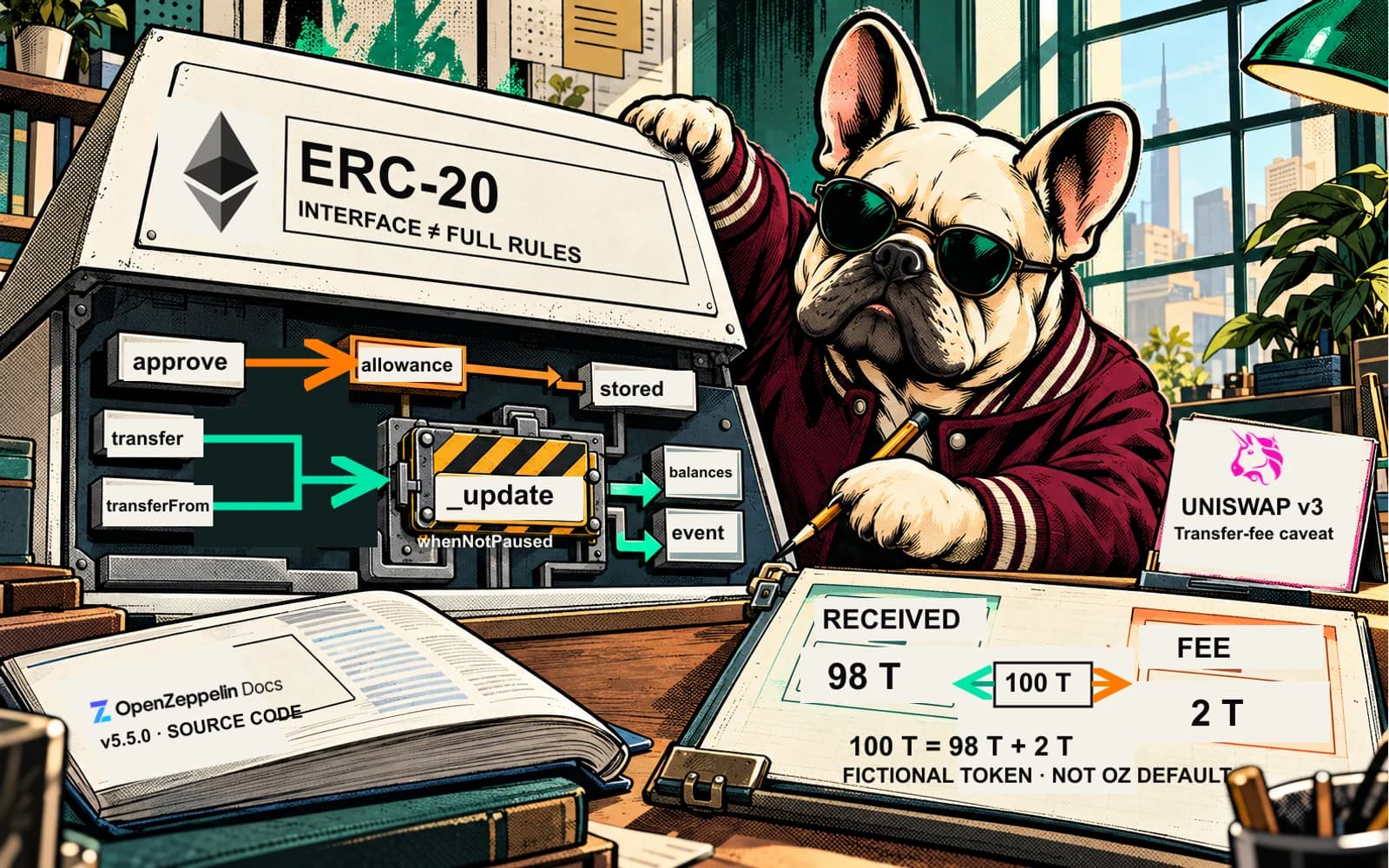
For a concrete source walkthrough, use OpenZeppelin Contracts v5.5.0, not an unnamed token allegedly using the library. Its ERC20 implementation sends transfer through _transfer and then _update. The base _update changes balances and emits a Transfer event. The source makes _update overridable so a derived contract can customize that path.
In this base implementation, transferFrom first handles the caller's allowance, then reaches the same transfer path. approve instead reaches _approve, which changes an allowance. It does not move the holder's token balance through _update.
That is a useful reading method: trace the public operation through inherited and overridden functions before deciding what a guard covers. Finding a function name in an interface file is only the start. The IERC20 file describes the interface; the implementation supplies the execution path.
OpenZeppelin's checked base reverts on failure rather than returning false. That is the documented choice of this implementation, not a reason to erase the standard's false-return requirement for callers handling other tokens.
A pause extension does not guard every function automatically
The pinned ERC20Pausable extension overrides _update with a whenNotPaused guard. That places transfers, minting and burning through the pause condition in this design.
It does not add that guard to the base approval path. Consequently, an otherwise valid approval can succeed while this extension's transfer path is paused. Increasing an allowance would not let the later transfer bypass the paused _update.
There is a second distinction in the source: the extension does not include public pause and unpause functions. A derived contract must expose appropriately controlled entry points to the Pausable module's internal functions. Seeing the library name alone does not identify a live administrator, prove that a usable pause entry point exists or show the present state.
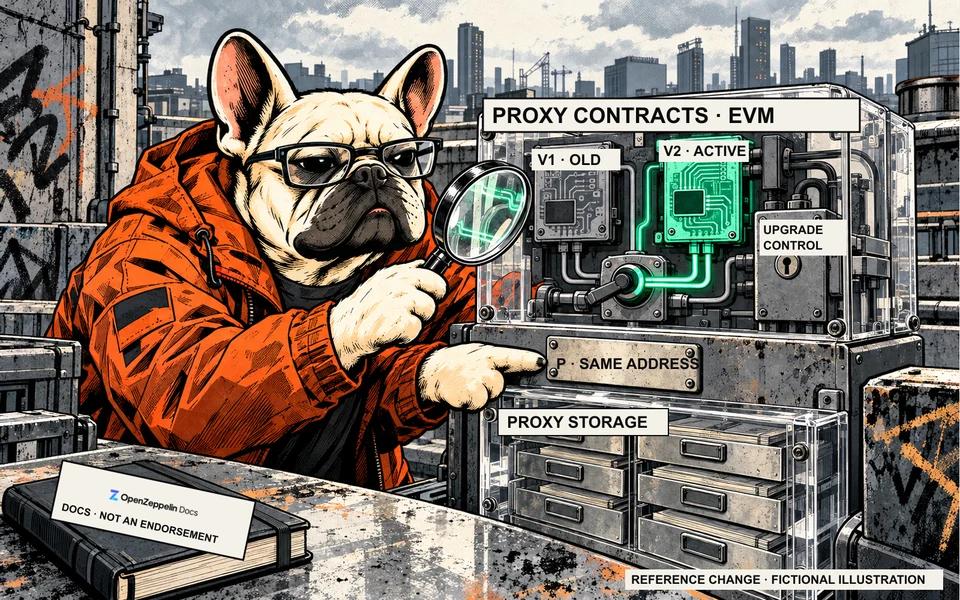
These are code-path observations about the named version. An overriding child contract, an upgrade or a different implementation can change the result. The proxy explainer covers why an unchanged address need not mean unchanged execution code.
A token blacklist and a pause have different scope
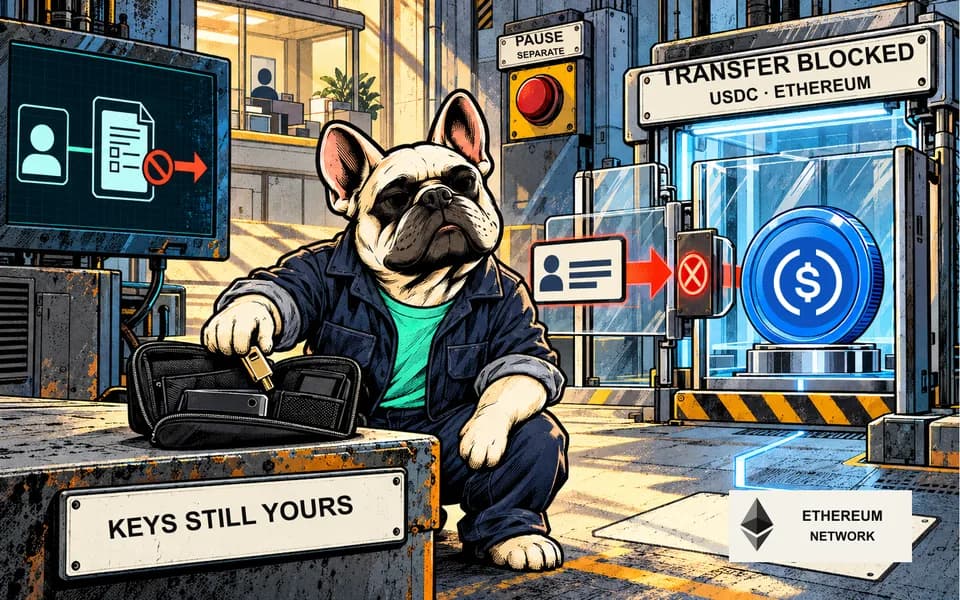
A blocklist, often called a blacklist or denylist, can restrict particular addresses. A token-wide pause can guard selected operations regardless of which holder requests them. A failed transfer is an outcome; it does not identify either cause by itself.
The OpenZeppelin extension above illustrates a pause. It does not establish an address blocklist or a transfer tax. Those would need their own implementation evidence. Our USDC restriction walkthrough separately examines Circle's address-level and pause controls, roles and balance behavior. Its rules should not be assigned to every ERC-20 token.
| Evidence to inspect | Question it can answer | What it leaves open |
|---|---|---|
| Standard and interface | What methods and events should an integration understand? | Which custom guards this implementation adds |
| Transfer path and overrides | Where are balance updates restricted or modified? | Whether a deployed address uses this exact code |
| Administrative entry points | How can a guarded state be changed in this code? | Who has authority now and which alternate routes exist |
| A particular execution record | What happened in that observed transaction? | A general explanation for every future transfer |
An explorer's verified-source badge helps locate code. It does not replace the network, implementation, state and observation-time checks, or certify unrestricted transfers.
A transfer fee changes the amount comparison
Uniswap's v2 integration documentation distinguishes inclusive transfer fees, where some of the sent amount is diverted or burned, from exclusive fees involving an additional trailing transfer. These are token behaviors that integrations need to account for, not the pool's own swap fee.
Consider a separate fictional token T with an inclusive deduction. Assume an isolated transfer, no rebasing, no other balance changes and no gas costs included in the token quantities. The sender starts with 500 T. The proposed amount is 100 T; the token diverts 2 T to a separate fee recipient and credits the destination with 98 T.
| Quantity in this invented example | Amount |
|---|---|
| Sender's balance reduction | 100 T |
| Destination's balance increase | 98 T |
| Separate fee recipient's increase | 2 T |
| Sender's ending balance | 400 T |
The accounting is 100 T = 98 T + 2 T, with 500 T - 100 T = 400 T left for the sender. The 2 T is 2% of the assumed 100 T amount. It is not an additional 2 T debit on top of that amount, and nothing is burned in this particular example.
This behavior is invented for the quantity comparison. It is not a fee in OpenZeppelin's base implementation, a deployed token's current rate or a certificate that every fee design satisfies ERC-20. Other fee designs can debit or allocate amounts differently. Native-network execution costs are separate again.
Integration support belongs to a particular route
A contract may expose familiar methods while an application expects a different amount to arrive. Uniswap's v3 token-integration page says fee-on-transfer tokens do not work with its router contracts. That is a documented v3 limitation, not a statement about every version, router or alternative implementation.
A success boolean is not itself an amount received. Nor does one Transfer event or a wallet's nominal amount establish the complete balance movement of a custom token. For an actual record, relate the call, effects and documented token rules to the exact network and execution. The transaction-reading guide separates execution success from the result a reader intended.
This article does not test a swap, endorse a workaround or promise that changing routers will make an asset transferable.
Keep a short record of the rules you actually found
Record the contract and network, source version or implementation, relevant operation and its path, controls on that path, and the state observation if one exists. Distinguish requested, debited and received token amounts, with their units. Mark anything you have not established as unknown.
That record is more useful than a generic "ERC-20 compatible" label. The standard defines a shared interface and required behavior; a transfer decision still needs evidence about the actual implementation and route.
Sources
Primary material checked October 29, 2026. OpenZeppelin code is pinned to v5.5.0 as a specific implementation reference, not described as the latest release or a deployed-token audit. Uniswap's cited pages concern v2 and v3 respectively; their limits are not generalized to v4 or all services. The standard's requirements and custom-token behavior are kept separate.
The T balances and deduction are fictional. No token address, active blocklist, administrator, deployed bytecode, wallet, RPC, signature, approval, transfer or swap was tested. There is no claim about recovery, legal status, investment suitability or a particular token's safety.
See something wrong? Brokzi logs material changes. Prepare a correction note.