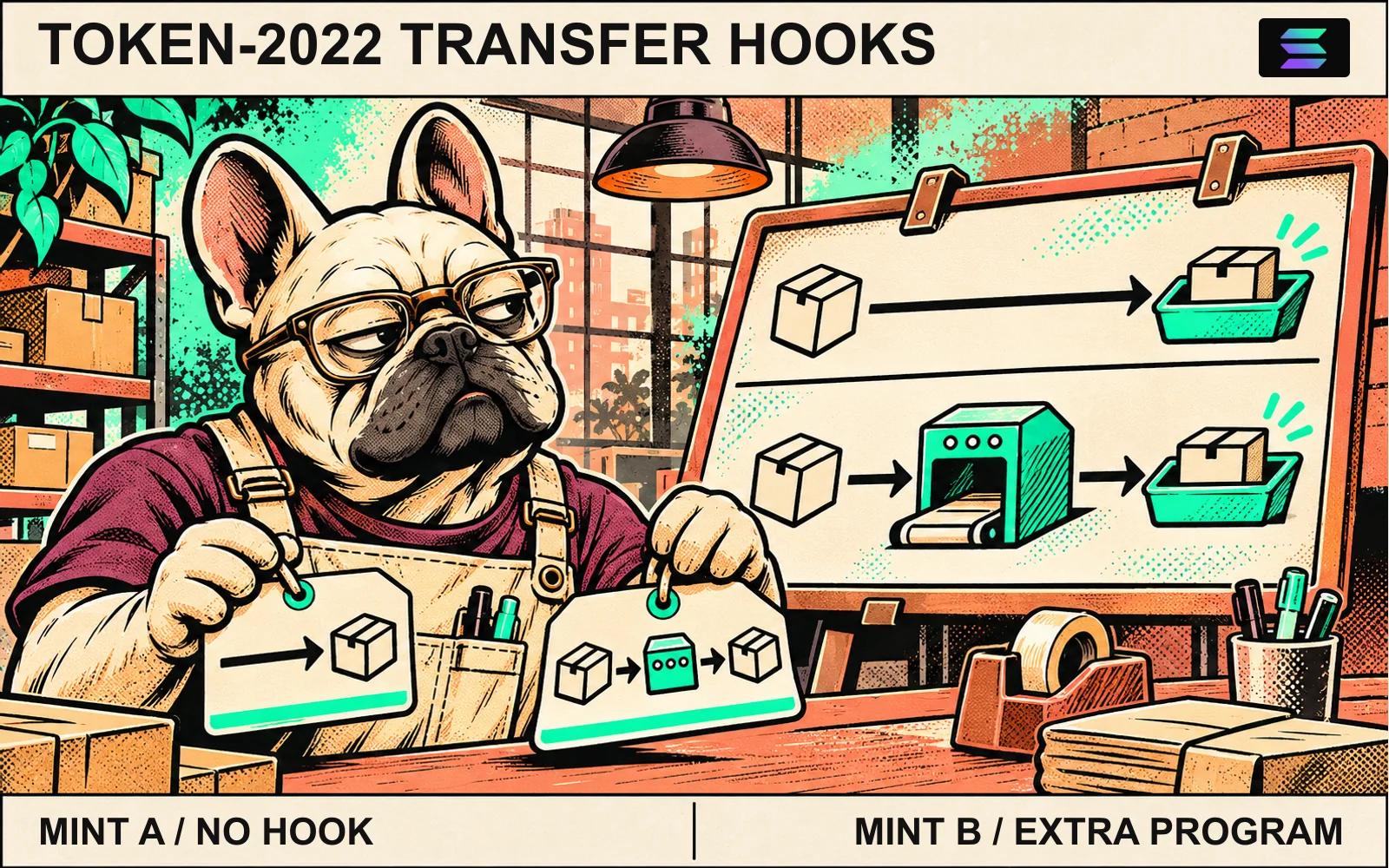
Two tokens can both use Solana’s Token-2022 program and still behave differently when they move between accounts. One mint can list a second program for Token-2022 to call. That setting lives in the mint, the record for the token itself.
What does the mint record tell you?
Look at the decoded mint’s extensions. In the Token-2022 v12.0.0 source, the Transfer Hook extension has a program_id field. A decoded view may label it programId. The field identifies the program configured for the hook.
| Fictional mint | Transfer Hook extension | What the record tells you |
|---|---|---|
DEMO-MINT-A | Absent | This mint has no Transfer Hook program configured through the extension. Other transfer rules may still apply. |
DEMO-MINT-B | Program ID DEMO-HOOK-B | Token-2022 calls this program if a transfer between distinct accounts reaches the hook step. |
The IDs in the table are placeholders. If a viewer doesn’t show extensions, look for a decoded view that does before treating an unseen field as absent. A third state is possible. The extension can exist with an empty program ID, which the extension code treats as no program to call. A separate hook authority field controls updates to the program ID when that authority is set.
What can the extra program do?
Token-2022 invokes the configured hook’s Execute instruction. The hook can run its own logic and return an error, which makes the transfer instruction fail. The Solana documentation describes checks on recipients and hooks that use extra accounts. The v12.0.0 transfer processor shows where that call happens and how errors propagate.
The mint record answers which program is configured. To understand what the program checks, you need documentation or code for that program. An ID alone gives you no verdict on the transfer, the program’s safety, or whether a past transaction succeeded. The release reviewed here returns early for a transfer whose source and destination are the same account.
How does this differ from a token account delegate?
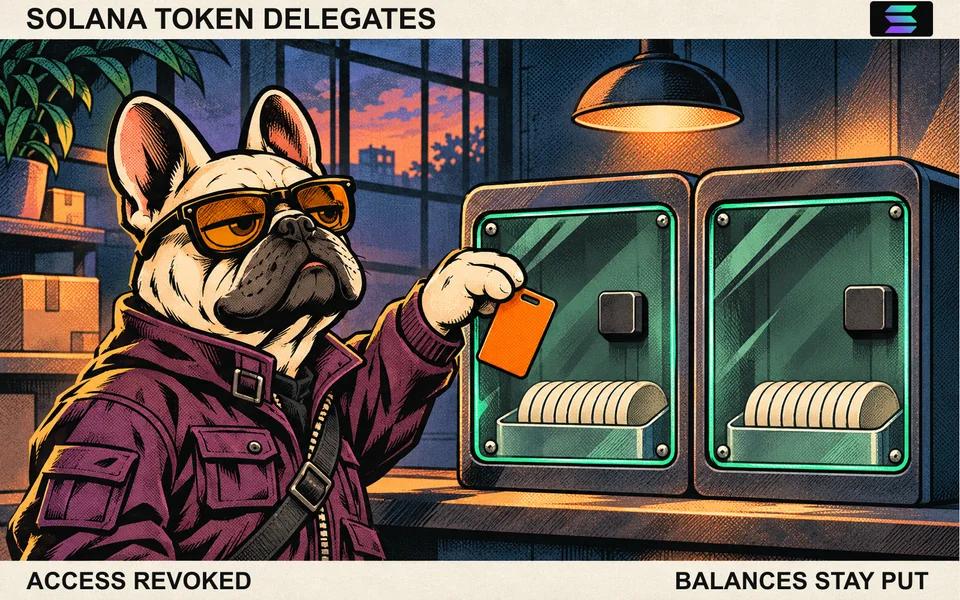
A hook is a mint setting. An ordinary delegate and its allowance live on a specific token account. The allowance answers who may act on that account and up to what amount. The same release’s processor checks transfer authority separately from the hook call. A mint can have a hook even when its source token account has no ordinary delegate. Revoking that account’s delegate clears the account permission and leaves the mint’s hook setting in place.
See how to distinguish a mint from a token account and how ordinary Solana delegate allowances work.
Sources
See something wrong? Brokzi logs material changes. Prepare a correction note.